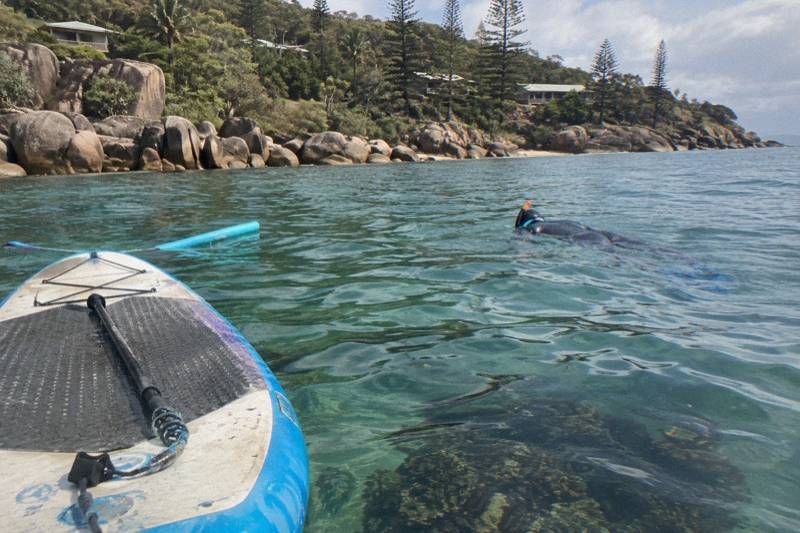
Are There Sharks On A Magnetic Island Snorkel Trip?
A straight answer built only from official safety advice and documented tour inclusions: what the records actually say about snorkelling safely around Magnetic Island, and what guided trips cover.
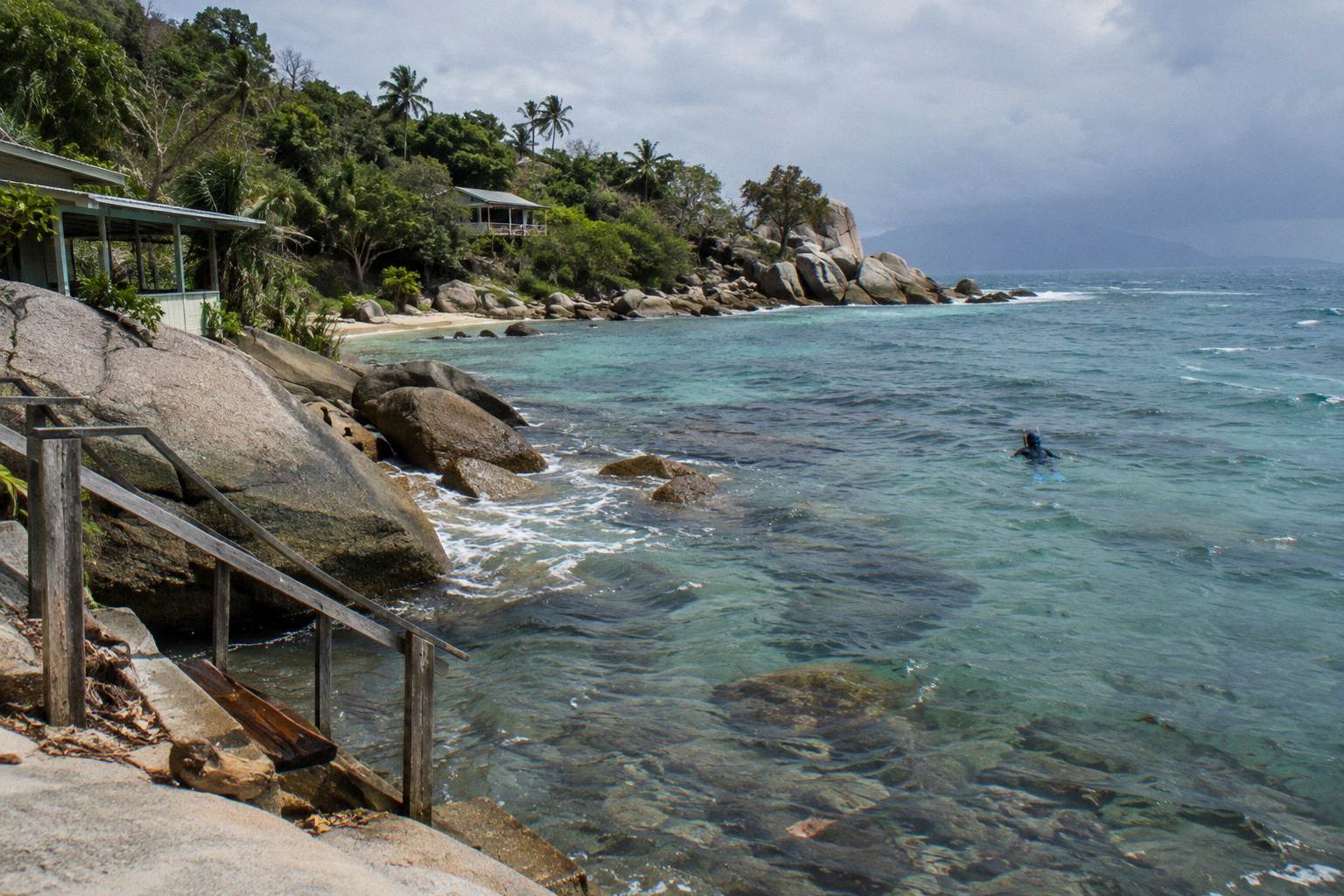
No shark sighting record, incident report or species list for Magnetic Island snorkelling is on file for this page, so the honest answer is that this site makes no shark claim in either direction. What is documented is a different hazard: marine stingers, whose season typically runs from November to May, and which every official safety source treats as the practical risk to plan around in these waters. Sharks live throughout the Great Barrier Reef Marine Park, that much is general knowledge, but a reader deserves better than a reassuring invention or a scary one. Rather than guess at what swims past any particular bay, this article reports only what official sources and tour listings actually state: the hazards with names, dates and rules attached, and the gear guided trips hand you at the marina.
That approach is deliberate. A question about sharks is really a question about whether it is safe to get in the water, and safety is answerable with facts. The Queensland parks service, Surf Life Saving Queensland and Townsville City Council all publish specific, current guidance for this island, and none of it, in the material on file, singles out sharks as the concern of the day. The stinger season, the lifeguarded beaches, the no-take zones where snorkelling is explicitly allowed: those are the documented pieces of the puzzle, and they are what the rest of this page lays out.
If you are deciding whether and what to book, the practical takeaway is simple. Swim inside a stinger net or on a guided trip in season, use the suit the operator supplies, and swim at a lifeguarded beach when you are going independently. The trips below are the island's main guided snorkel options, all of which supply protective gear as part of the ticket.
What Official Safety Advice Actually Says About These Waters
Surf Life Saving Queensland states that the risk from box jellyfish and Irukandji is higher during the marine stinger season, which typically runs from November through to May, and Townsville City Council defines its local stinger season as 1 November to 31 May. Neither source, in the material on file, names sharks as a primary hazard for this coastline. That is the shape of the official record: the hazard with a season, a council policy, net installations and patrol hours attached to it is the stinger, not the shark. The council installs stinger nets at many beaches across the region over the season and removes them only after the season ends and 14 consecutive days of net drags find no stingers, which tells you how seriously the authorities take it.
The island's patrolled beaches are documented in detail. Horseshoe Bay has one lifeguard and stinger nets in use, with patrol hours every day from 8:15am to 4:15pm. Picnic Bay has stinger nets in use and volunteer patrols from 1 September to 31 May. Alma Bay has a lifeguard over the same daily hours, though the available reads conflict on its nets, so this page claims nothing either way there. Beyond the fixed posts, a roving lifeguard service runs systematic patrols of all Magnetic Island beaches by vehicle and jet ski.
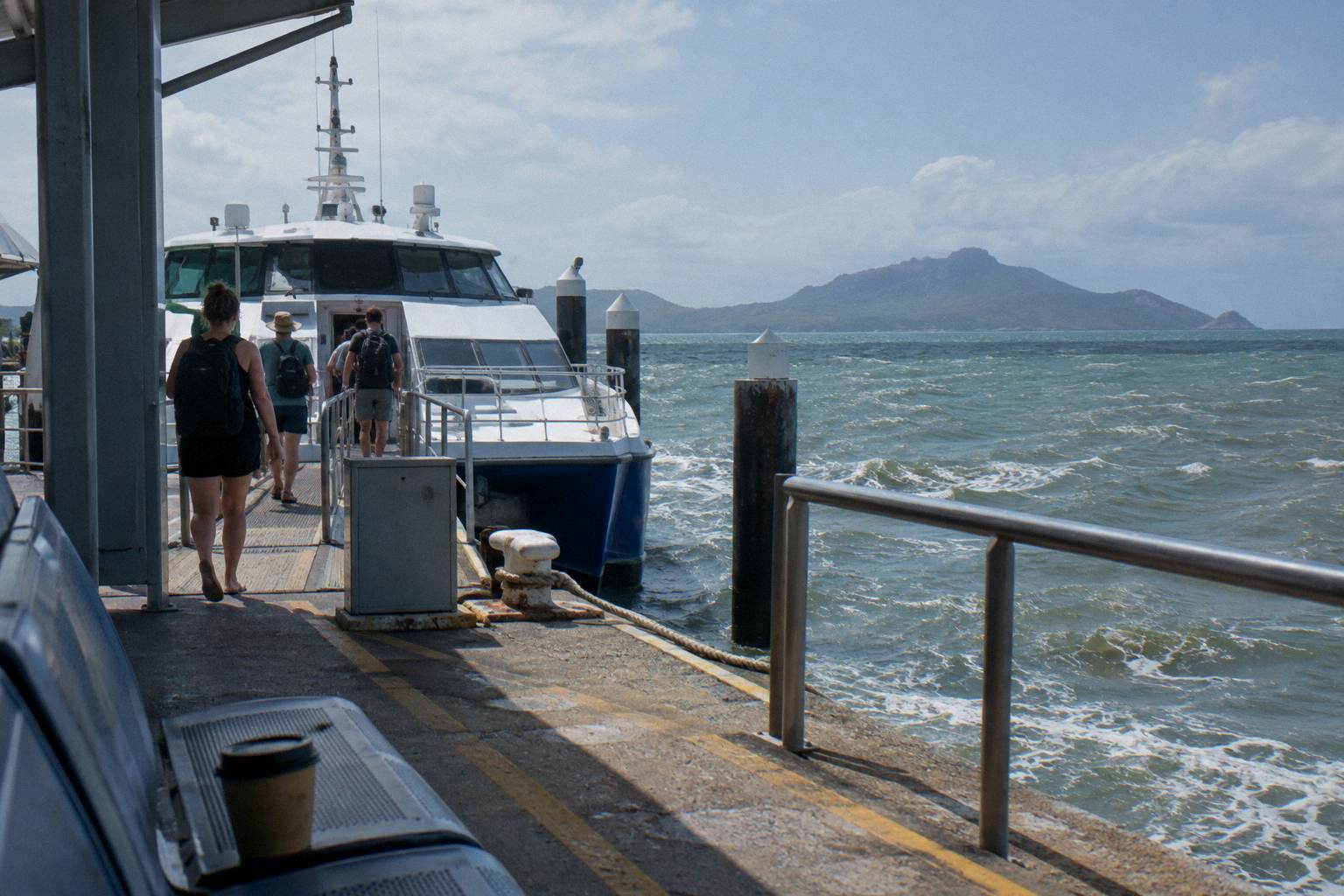
For stings, the Surf Life Saving Queensland guidance on file covers first aid for box jellyfish stings, including vinegar applied for at least 30 seconds. Carrying vinegar is standard practice on North Queensland beaches in season, and the patrols above are equipped for exactly this scenario. The Queensland parks service adds its own standing warning for the island's national park waters: beware marine stingers. It is the same message from every level, and it is the one worth acting on.
Surf Life Saving Queensland's marine stinger advice is the primary source for the season dates and sting response, and Townsville City Council's lifeguard hours page lists which island beaches are patrolled and netted.
Want A Guided Trip Instead Of Going Alone?
A guided trip replaces every solo judgment call in this article with a crewed, equipped day on the water: suits and flotation in the inclusions list, instruction before the swim, and a group around you the whole time. The reef cruise from Townsville or Magnetic Island runs 10 hours out to the central Great Barrier Reef, rates 4.7 from 105 reviews, costs from A$394, and cancels free up to 24 hours before departure. It suits the reader whose real question is not what is in the water but whether someone else is watching it for them.
A full-day cruise to the central Great Barrier Reef removes the guesswork: professional crew, supplied flotation for nervous swimmers, and a floating device in hand the whole way. Free cancellation up to 24 hours before departure means you can lock the day in early and adjust if the weather shifts.
Which Hazards Are Documented For Island Waters
The documented hazards in the sources on file are marine stingers in the warm months, the general Great Barrier Reef cautions that apply anywhere in the marine park, and the ordinary risks of swimming near granite headlands and fringing reefs. No source on file documents a shark hazard specific to Magnetic Island. This is where honesty matters more than drama. A page that tells you "sharks are harmless here" or "sharks are a real danger here" without a source is making it up, and this site will not do either. What the table below shows is every hazard the official record actually names, so you can plan around real things.
| Documented Hazard | What The Sources Say | Season Or Timing | Where It Applies |
|---|---|---|---|
| Box jellyfish and Irukandji | Risk is higher in marine stinger season; vinegar for at least 30 seconds for box jelly stings | Typically November to May; council season 1 November to 31 May | All North Queensland waters including Magnetic Island |
| Unprotected beaches | Some beaches have stinger nets, others do not; swim at patrolled beaches in season | Stinger season | Horseshoe Bay and Picnic Bay have nets on the council record; Alma Bay's status is conflicting |
| Marine stingers generally | QPWS standing park warning: beware marine stingers | Year-round caution, seasonal peak | Magnetic Island National Park waters |
| Feeding wildlife | Not allowed in the national park; affects animal health and population balance | Always | Whole island |
| Walking tracks | Forts Walk is Grade 3, 4 km return, allow 2 hours | Always | Forts Junction, between Arcadia and Horseshoe Bay |
Two things follow from that table. First, everything with a date attached is a stinger-related fact, which tells you where the planning effort belongs: the warm months, the netted beaches, the suits. Second, the only other entries are standing park rules, not seasonal threats, so they cost you nothing extra to follow. The reef's own management authority describes green zones, the Marine National Park zones, as areas where boating, swimming, snorkelling and sailing are allowed and taking is not, which covers the mode of harm most people actually worry about: the idea that the water itself is off limits. It is not. Snorkelling is an explicitly permitted activity in these zones, which is a useful fact when a first Google page is full of vague warnings.
The Great Barrier Reef Marine Park Authority's own pages set out how the marine park is zoned and what is permitted where, and that general zoning rule is the extent of what this site will claim about specific bays.
What Guided Snorkel Trips Include For Safety
Guided snorkel trips around Magnetic Island supply the protective and practical gear as part of the ticket: masks, snorkels and fins, wetsuits or UV stinger suits depending on the season, flotation aids for weak swimmers, and on the Aquascene trips, stand-up paddleboards and glass-bottom boogie boards as alternatives to swimming. The reason this matters for the original question is that a guided trip converts an open-water decision into a managed one. You are with a crew, in a group, with suits on and flotation available, and the operator's own weather policy covers what happens if conditions turn. Aquascene, for instance, contacts you to cancel, offer an alternative date, or issue a full refund when weather kills the trip.
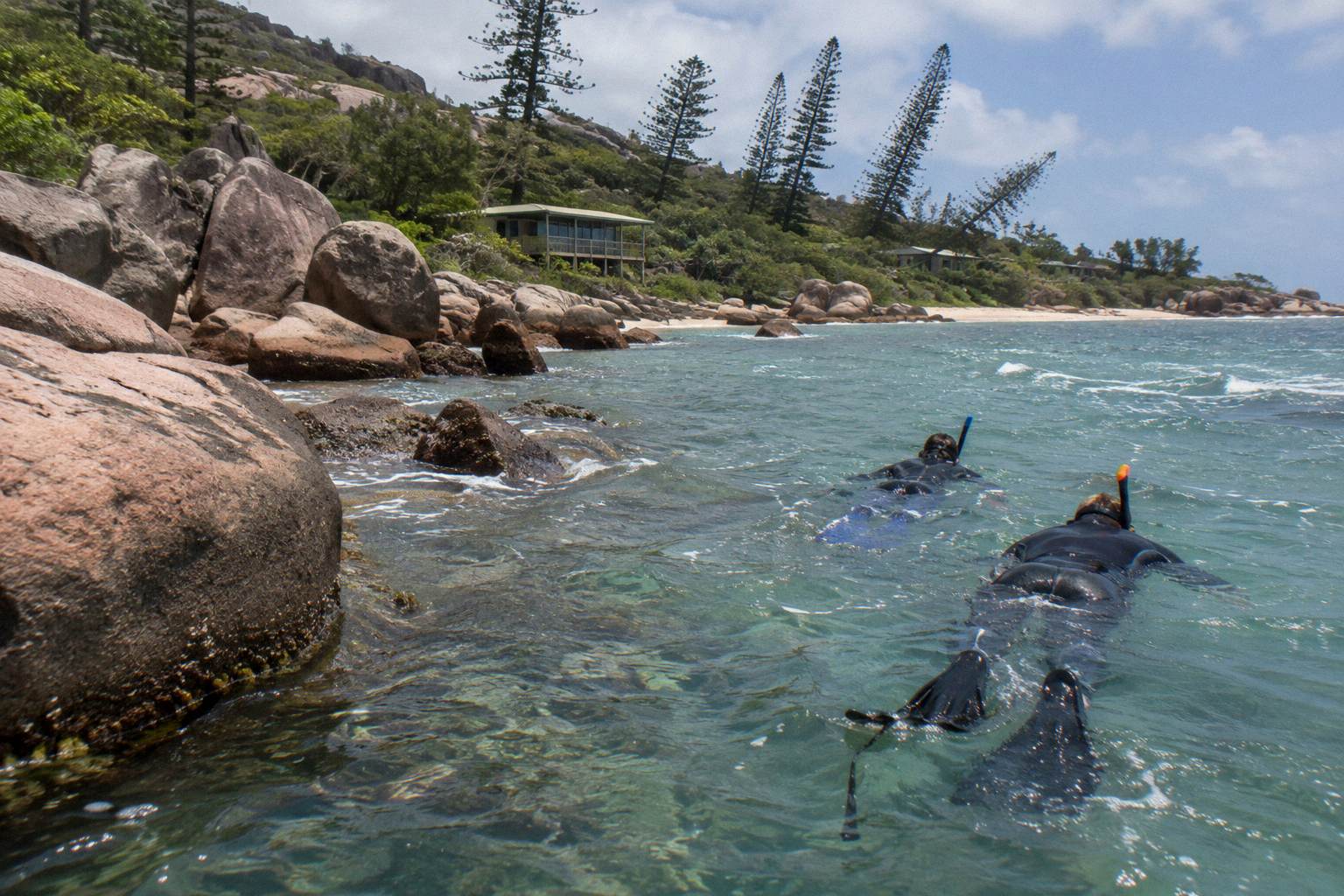
The featured trip on this page is the Snorkel Discovery Tour by Aquascene, which boards at Magnetic Island Marina, 123 Sooning St, Nelly Bay, a short walk from the ferry terminal. It runs from A$179, carries a 4.9 rating from 301 reviews, and includes the boat cruise, morning tea, a tropical fruit platter, snorkelling gear, wetsuits from June to September and seasonal UV stinger suits. Free cancellation applies up to 24 hours before the start. For a reader weighing whether to get in the water at all, a trip like this answers the question with equipment and supervision rather than reassurance, and there is a longer comparison of the options in the guide to how the island's snorkel tours compare.
The table below sets out what each of the main guided snorkel products on this site's lineup actually includes, straight from the booking pages.
| Trip | Operator | Price | Rating | Protective And Safety Inclusions |
|---|---|---|---|---|
| Snorkel Discovery Tour | Aquascene Magnetic Island | from A$179 | 4.9 from 301 reviews | Snorkel gear, wetsuits June to September, seasonal UV stinger suits, flotation aids, paddleboards |
| Great Barrier Reef Cruise | Adrenalin Snorkel and Dive | from A$394 | 4.7 from 105 reviews | Full-length suits, masks, fins, floating devices for novices including pool noodles, vests and life rings, reef ecology talks |
| MOUA and Reef Snorkel Experience | Adrenalin Snorkel and Dive | from A$394 | 4.5 from 84 reviews | Snorkelling gear, snorkelling instruction, morning and afternoon tea, buffet lunch, reef and underwater-art site visits |
| Aquascene Circumnavigation Tour | Aquascene Magnetic Island | from A$179 | 4.8 from 22 reviews | Snorkel gear, wetsuits, seasonal UV stinger suits, paddleboard, glass-bottom boogie boards, flotation aids |
Notice the pattern across every row: suits, flotation and instruction appear in every inclusion list, because the operators design around the documented hazard, the one with a season. The MOUA trip deserves its own word because it is a different kind of day: 10 hours out to the Museum of Underwater Art and the outer reef, departing from the Fuel Wharf at Breakwater Marina in Townsville or the Nelly Bay terminal, with a buffet lunch and snorkel instruction included and a snorkel guide available at extra charge. Free cancellation runs to 24 hours before start. It is the pick for a reader who wants the reef proper rather than the island's fringing bays, and the question of what swims near you is answered the same way as everywhere else on this page: by the crew, the suit and the group, not by a promise.
Where You Can Snorkel Straight From The Beach
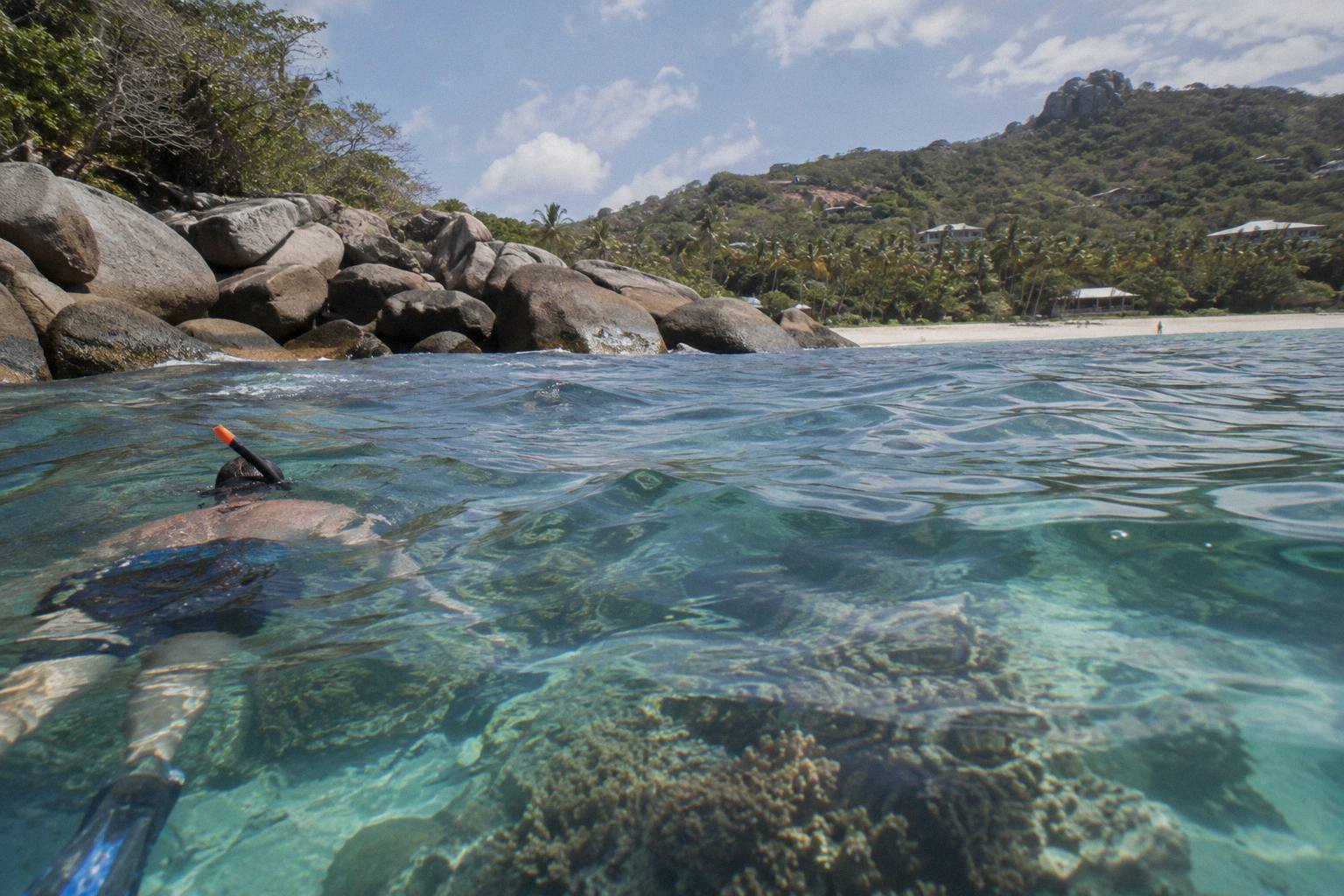
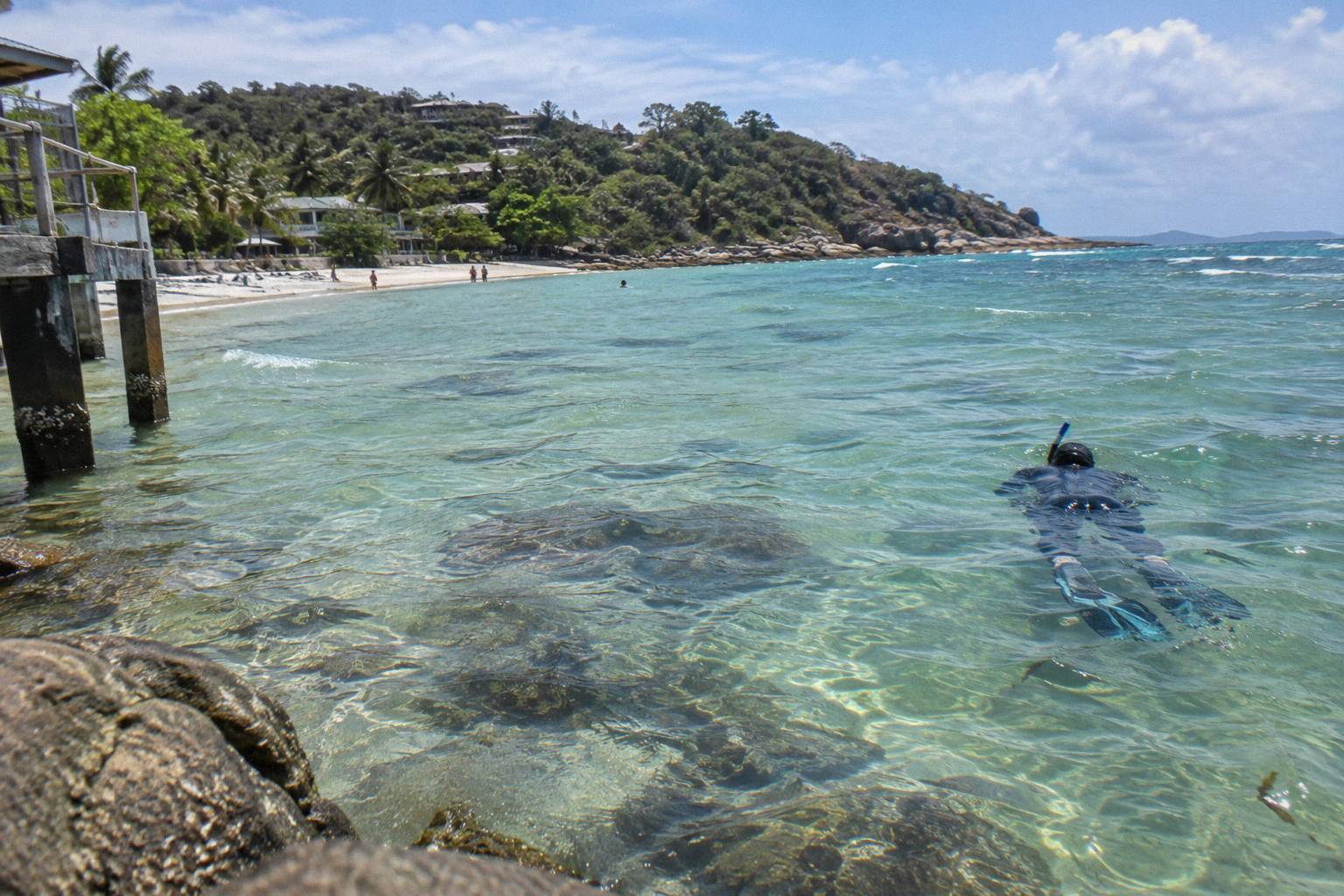
The Queensland parks service names Arthur Bay and Florence Bay as ideal for snorkelling, where the fringing reef is accessible straight from the beach, and notes you can swim with sea turtles and a diversity of fish among the corals and seaweed there. It names no snorkel trail at Geoffrey Bay or Nelly Bay, so this site does not claim one. That distinction is worth understanding, because tourism copy loves the phrase "snorkel trail" and official pages here do not use it. What is on the record is simpler and just as useful: two bays on the island's north-east side where the reef starts at the sand, in a national park that covers 78 percent of the island's 5,184 hectares and sits inside the Great Barrier Reef World Heritage Area.
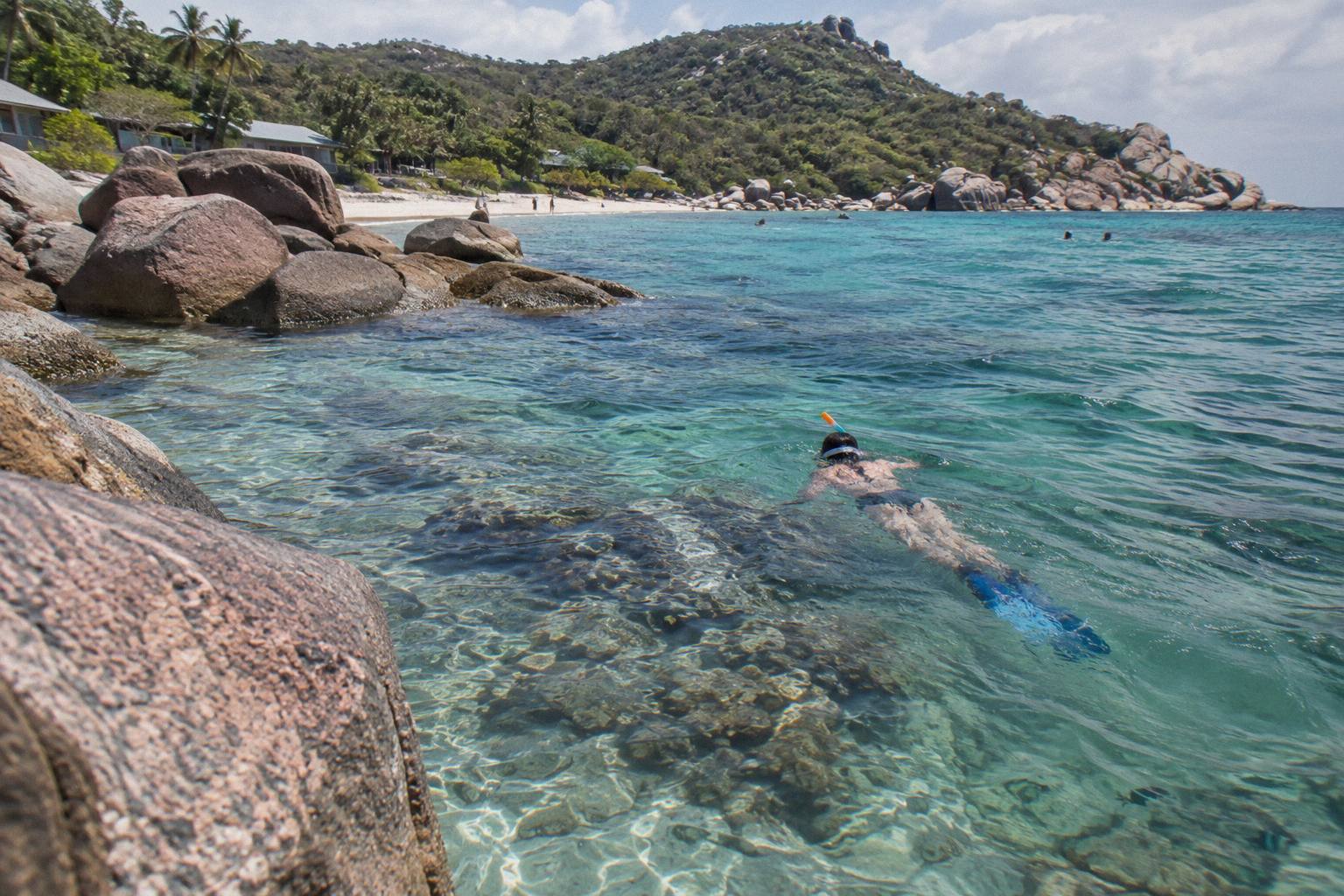
Beach snorkelling shifts the planning onto you, which is why the earlier sections matter more, not less. In stinger season, from November through May, an unguided swim at an unnetted bay means wearing a full stinger suit you brought yourself, because no operator is handing you one at a public beach. Outside the season the calculation eases, but the standing advice to swim near others and at patrolled beaches does not. The parks service also warns that feeding wildlife is not allowed in the national park, and the island's koalas, introduced in the 1930s and numbering around 800 by a 2012 study, are a good reason to walk the Forts Walk early in the day when wildlife is more active: a reminder that this island's famous animals are mostly on land, in the eucalypts, not circling the swim zone.
For depth on the specific bays, the site's own guides go further than a blog post can: read where the best snorkelling on the island is and the guide to snorkelling around Magnetic Island generally. Both keep to the same discipline as this page: official sources for official claims, tour listings for tour facts, and nothing invented in between. Magnetic Island Tours applies that rule across every article, which is why this page leaves the shark question where the evidence leaves it, unanswered, and answers the safety question underneath it instead.
How To Plan A Low-Risk Snorkel Day
Plan around the stinger season, swim at netted or patrolled beaches or on a guided trip, wear the suit supplied, and use the flotation aids on offer if you are not a confident swimmer: those four decisions cover every documented risk in the sources on file, and none of them depends on knowing anything about sharks. The checklist below turns the official record into an ordinary day plan, the kind you can follow without thinking hard about any animal at all.
| Timing | What To Do | Why It Is On The Record |
|---|---|---|
| November to May | Swim inside stinger nets at Horseshoe Bay or Picnic Bay, or take a guided trip | Council stinger season runs 1 November to 31 May; nets are in use at these beaches |
| Any day in season | Wear the full suit the operator supplies, or bring your own for beach swims | Trips list seasonal UV stinger suits in their inclusions |
| Any day | Swim between 8:15am and 4:15pm at a lifeguarded bay | Horseshoe Bay and Alma Bay patrol hours, daily |
| June to September | Expect wetsuits rather than stinger suits on tours | Aquascene supplies wetsuits in the cooler months |
| Any day on land | Do not feed wildlife; keep distance from koalas | QPWS park rules and wildlife care guidance |
One planning note on the calendar: the Bureau of Meteorology's Townsville averages show the dry, settled window from May through September, with mean monthly rainfall of 33.7 mm in May and 9.9 mm in September, against summer means of 274.4 mm in January and 197.9 mm in March. The winter months are dominated by south-east trades and mostly fine weather. Water warmth and stinger risk travel together, so the comfortable-and-warm choice is late May to September: suits for coolth rather than stingers, clear days, and the whale bonus that some boat tours list as a seasonal extra from July to September, never a promise. The full picture is in the guide to the best time of year for snorkel trips.
What A Snorkel Trip Day Actually Looks Like
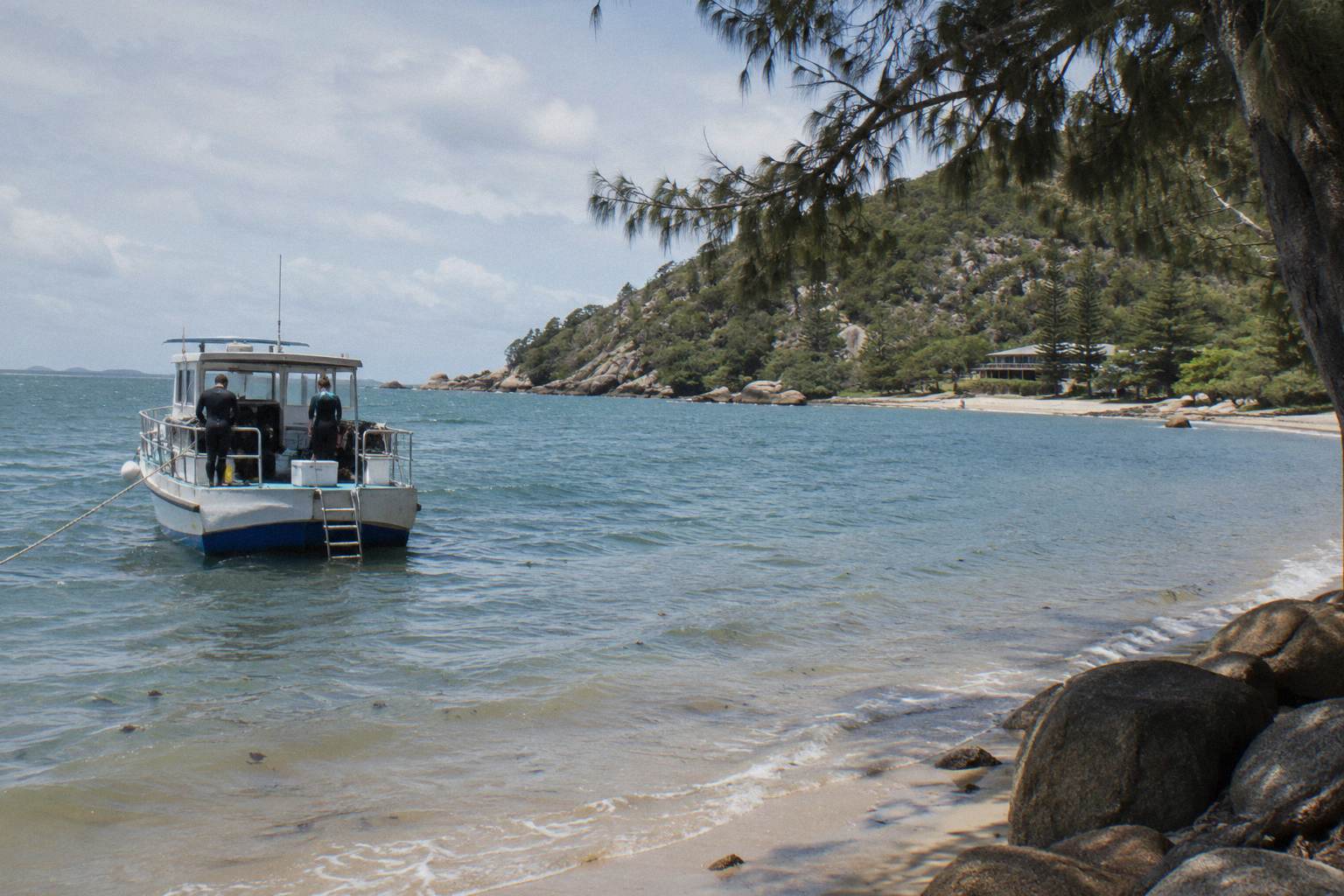
On a guided day, the structure does the safety work: a crew that picks the stop, gear handed out on board, flotation in the water beside you, and a set schedule that keeps the whole group together. The Aquascene days run from the Nelly Bay marina with morning tea and fruit included; the Adrenalin reef days run about 10 hours with instruction and lunch built in, collecting island passengers at the Nelly Bay terminal waterfront from 7:50am. Knowing the shape of the day, the safety frame in the earlier sections stops being abstract and becomes a timetable.
On the Aquascene trips from Nelly Bay marina, the boat cruises the island's bays, stops for snorkelling where conditions suit, and puts paddleboards and glass-bottom boogie boards in the water alongside the swim zone, so a nervous swimmer has ways to see the reef without committing to a long swim. Morning tea, fruit and drinks are on board. The tour's inclusions run to chilled water and soft drinks as well as tea and coffee, which is a small detail that tells you the shape of the day: slow, catered, and organised around easy water time.
On the outer reef trips the rhythm changes. The Adrenalin boats leave Townsville at 7:25am or collect Magnetic Island passengers at the Nelly Bay terminal waterfront from 7:50am, and the day runs about 10 hours out to the reef and, on the MOUA version, the underwater art installations. Snorkel instruction is included, a guided snorkel guide is an extra charge, and lunch is buffet style on board. The Great Barrier Reef Cruise version adds reef ecology talks and hands-on demonstrations before the water time, and its exclusion list shows the add-ons plainly: a snorkel guide at A$10 per person, a dive guide at A$20 for divers with fewer than ten logged dives, and a fuel levy at A$15 per person. Printing those extras is the honest way to price a day, and the full tariff picture for getting to the island at all is covered in how long the ferry takes and whether a tour fits the same day.
The point of the picture is this: everything that happens on these days is structured, crewed and equipped, which is the practical answer to the underlying worry. A reader who books a guided trip is not making a solo judgment call in open water. The operator has made it, in writing, in the inclusions list.
If you are weighing options, these are the three guided snorkel trips this site features for the island and the reef beyond it.
Common Questions About Sharks And Snorkelling On Magnetic Island
Are There Sharks On A Magnetic Island Snorkel Trip?
No shark record for Magnetic Island snorkelling is on file for this page, so no claim is made either way. Sharks exist across the Great Barrier Reef Marine Park as a general matter, but the documented hazard in the official sources is marine stingers, whose season typically runs from November to May, and every safety measure on this page is built around that.
Is It Safe To Snorkel Around Magnetic Island?
Official sources support snorkelling here with ordinary precautions: the parks service names Arthur Bay and Florence Bay as ideal for beach snorkelling, and green zones in the marine park explicitly allow swimming and snorkelling. In stinger season, swim at netted beaches like Horseshoe Bay or Picnic Bay, or take a guided trip where suits and flotation are supplied.
Do I Need A Stinger Suit To Snorkel Here?
From November to May, yes, that is the official advice: the marine stinger season runs from 1 November to 31 May on the council's definition. Guided trips supply seasonal UV stinger suits as part of the ticket, and wetsuits from June to September in the cooler months. For independent beach swims in season you need to bring your own suit or swim inside the nets.
Which Beaches Have Lifeguards And Stinger Nets?
Horseshoe Bay has a lifeguard and stinger nets, patrolled every day from 8:15am to 4:15pm. Picnic Bay has stinger nets with volunteer patrols from 1 September to 31 May. Alma Bay has a lifeguard over the same daily hours, but the available records conflict on its nets, so this site makes no claim there.
What Does A Guided Snorkel Trip Include?
The Aquascene Snorkel Discovery Tour, from A$179, includes snorkelling gear, wetsuits from June to September, seasonal UV stinger suits, flotation aids, paddleboards, morning tea and a fruit platter, with free cancellation up to 24 hours before. The outer reef trips from Adrenalin include gear, instruction, suits and lunch, with guided snorkel guides available at extra charge.
When Is The Best Time Of Year To Snorkel Here?
May to September is the settled window: Bureau of Meteorology averages for Townsville show mean monthly rainfall of 33.7 mm in May and 9.9 mm in September, dominated by fine weather and south-east trades. That period is outside the stinger season, and some boat tours list whales as a seasonal extra from July to September.