How Many Koalas Live On Magnetic Island?
A 2012 study estimated about 800 koalas live on Magnetic Island, descendants of animals introduced in the 1930s. Here is what that figure means and how to see them responsibly.
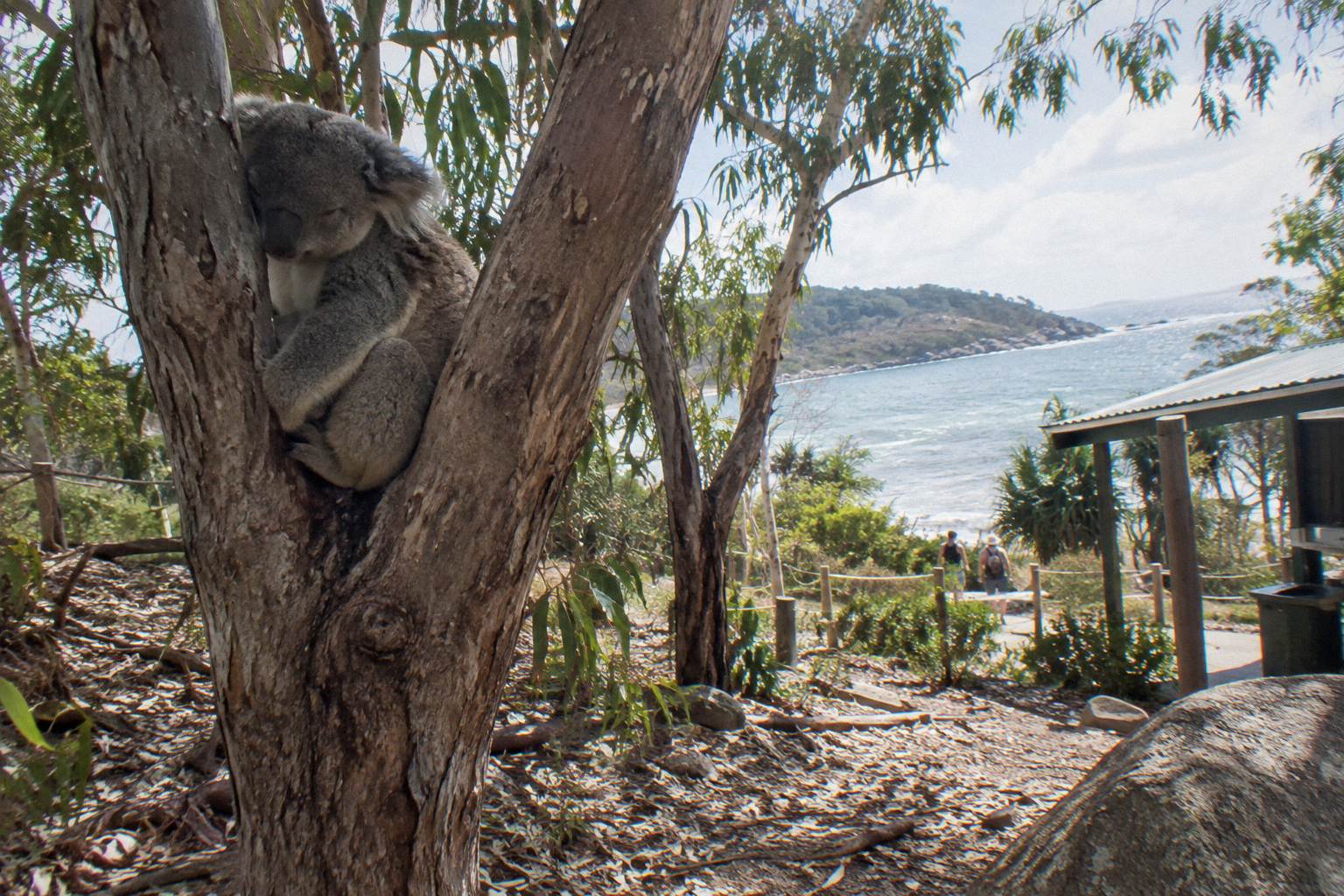
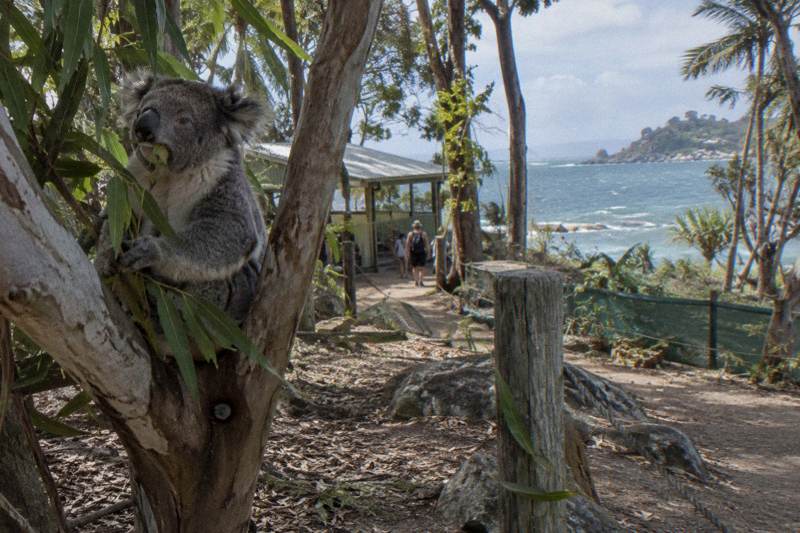
The most recent figure on file comes from a 2012 study, which estimated the island supports a population of around 800 koalas. That number is an estimate, not a census, and no newer count appears in the official record. For context, the island is small, about 5,184 hectares, and 78 percent of it is protected as national or conservation park, which is one reason the population has held on here.
That single sentence carries most of what the official sources will tell you, and it is worth being precise about what it does and does not say. The figure of roughly 800 koalas comes from research cited by Queensland Parks and Wildlife Service, which manages the national park that covers most of the island. It is a study estimate from 2012, so it describes the population as it stood well over a decade ago. Nothing in the park service's published material updates it, and this article will not extrapolate from it. A reader who sees "800 koalas" on a tourism flyer has no way of knowing the number's age; now you do.
The second thing worth knowing is more surprising to most visitors: koalas are not native to Magnetic Island. The park service records that they were introduced in the 1930s, deliberately brought across from the mainland to shield them from perceived threats there. The introduction worked, in the sense that the animals established themselves and bred. The island now carries one of the better-known koala populations in northern Queensland, living wild in eucalypt and acacia woodland rather than in enclosures.
Why does the population do well here? Habitat is the short answer. The island sits inside the Great Barrier Reef World Heritage Area, and more than three quarters of its land is national or conservation park, meaning the woodland koalas depend on has not been cleared for housing the way mainland coastal scrub often has. The traditional custodians of the island, the Wulgurukaba, call it Yunbenun. For a koala, the boulder-strewn headlands and low coastal forests dominated by towering hoop pines offer continuous canopy across most of the island's spine.
If you are planning a visit around seeing one, the realistic framing is this: the odds of spotting a wild koala on Magnetic Island are better than almost anywhere else in north Queensland, but nothing is guaranteed, and the way you search matters more than the amount of time you spend. The sections below cover where to look, when to look, how to behave when you find one, and which guided options improve your chances without disturbing the animals.
For many visitors the easiest route to a koala encounter combines a guided island tour with a visit to a wildlife park, and the two options below sit alongside the most popular guided trip on the lineup.
Why Were Koalas Introduced To The Island?
Koalas were brought to Magnetic Island in the 1930s, introduced from the mainland to protect them from perceived threats in their original habitat. The park service describes the population today as numbering around 800 animals based on the 2012 study. The introduction predates the national park itself, and the animals now live entirely wild across the island's protected woodland.
The 1930s were a hard decade for koalas on the mainland. Hunting for the fur trade had devastated populations in the preceding decades, and while protections were arriving, remnant groups in north Queensland were small and fragmented. Moving some animals to an island with extensive eucalypt forest and few threats was, at the time, a practical conservation measure. The park service's own wording is that koalas were introduced "to protect them from perceived threats on the mainland."
What happened next is the interesting part. The translocated animals found an island where the habitat was largely intact and, importantly, where it would later be locked up as national park. Of the island's 5,184 hectares, 78 percent is national or conservation park today. That is an unusually high protection share for a settled island so close to a major city; Townsville lies roughly 8 kilometres to the south-west across Cleveland Bay. The koalas spread through the woodland and now occur across the island, with the Forts Walk country between Arcadia and Horseshoe Bay the best-documented place to see them.
The local care group, Magnetic Island Nature Care Association, classifies the koala as an introduced species on the island but treats it as endangered in the wider sense and asks visitors to keep their distance from any they see, because the animals are easily stressed and may desert their young if approached. That request sits at the centre of responsible koala watching here, and there is a full section on it below.
The key facts about the population, in one place:
| Fact | Figure | Source note |
|---|---|---|
| Population estimate | Around 800 koalas | Study estimate from 2012, cited by the park service |
| Origin | Introduced in the 1930s | Translocated from the mainland for protection |
| Island land area | 5,184 hectares | Park service park page |
| Protected share | 78 percent national or conservation park | Park service park page |
| Best documented habitat | Forts Walk, Arcadia to Horseshoe Bay | Park service track page |
For visitors who want a guaranteed koala sighting rather than a wild search, the island also has a dedicated wildlife park at Horseshoe Bay, where entry includes ranger-guided encounters with koalas and other native animals. The price shows when you check availability.
Where Is The Best Place To Spot A Wild Koala?
The Forts Walk, a 4 kilometre return track graded 3, starting from Forts Junction on the road between Arcadia and Horseshoe Bay, is the place the park service itself names for koala sightings. Its official description says walkers travel through eucalypt and acacia woodland where there is a good chance of spotting a wild koala in the stunted trees. Allow 2 hours walking time.
That wording, "a good chance", appears on the Queensland Parks and Wildlife Service page for the walk, and it is unusually direct for an official source. Park managers rarely promise wildlife, so when they do, it reflects a genuinely reliable pattern. The reason is structural: the track climbs through exactly the kind of open, stunted woodland koalas favour, and the animals are visible at eye level or below rather than hidden in tall canopy.
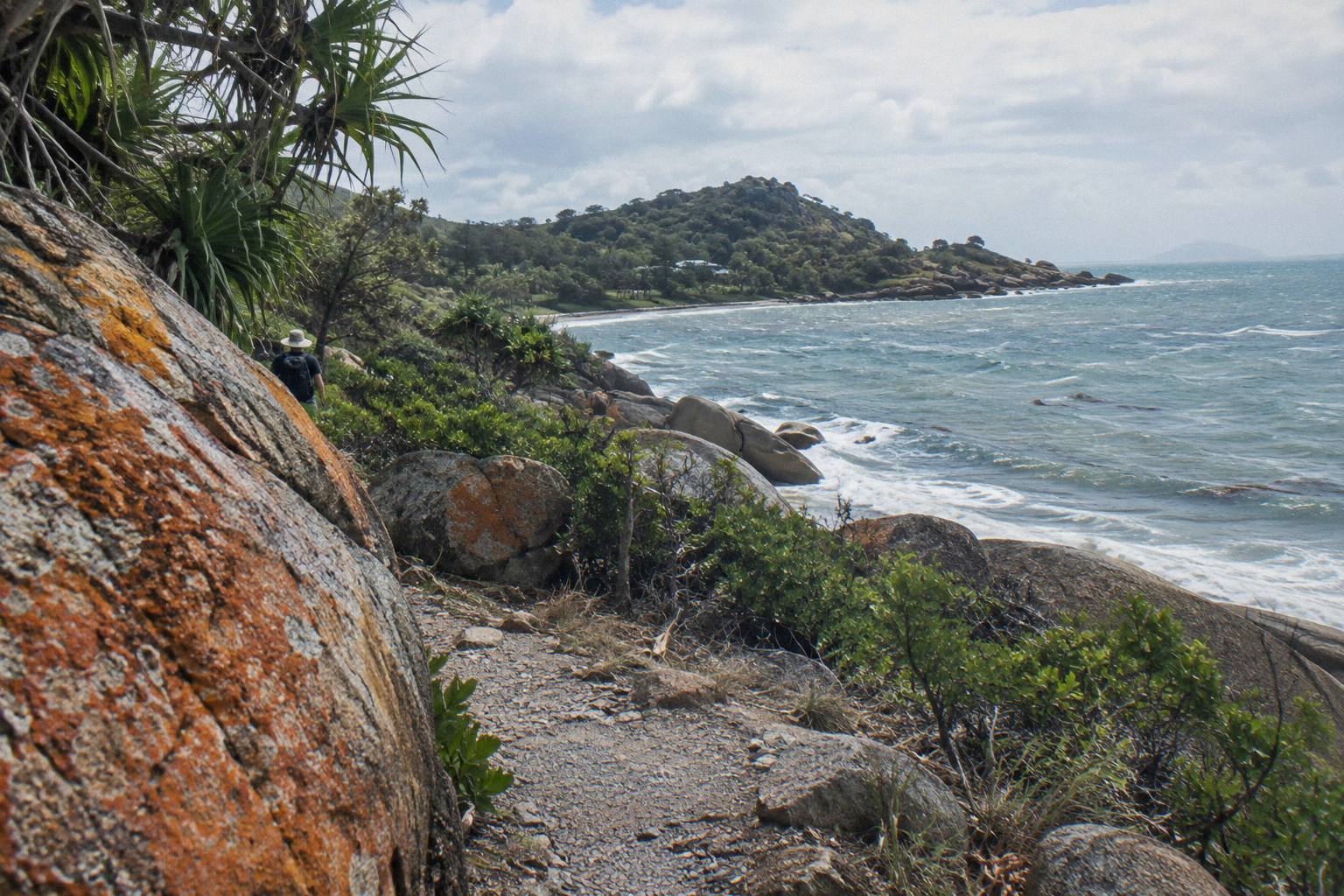
Timing matters as much as place. Koalas rest in eucalypt branches for most of the day and feed in the late afternoon, so the park service advises walking early: it is cooler, parking is easier, and koalas and other wildlife are more active. A walker on the Forts Junction track at 7am has a different experience to one arriving at midday. The track itself is well formed, and the same trail network branches to Arthur Bay, Florence Bay and the WWII fortifications, which the park service describes as the best-preserved coastal defence fortifications in Queensland.
The wider track network around the koala country, as the park service lists it:
| Track | Distance | Time | Grade |
|---|---|---|---|
| Forts Walk | 4 km return | 2 hr return | 3 |
| Forts Junction stroll | 400 m return | 15 min return | 1 |
| Arthur Bay from Forts Junction | 1 km one way | 20 min one way | 2 |
| Florence Bay from Forts Junction | 1.8 km one way | 35 min one way | 3 |
| Searchlight Tower from Forts Junction | 2 km one way | 40 min one way | 3 |
| Radical Bay from Horseshoe Bay | 1.5 km one way | 50 min one way | 4 |
If you would rather have a guide's eyes doing the searching, the Forts Walk guided tour options are covered in detail elsewhere on this site. The general principle stands regardless of how you travel: walk slowly, scan the forks of low branches, and look for the rounded grey shape that locals describe as a "fuzzy basketball" wedged where trunk meets limb. A second pair of trained eyes roughly doubles your effective search.
How Should You Behave Around A Wild Koala?
Keep your distance, stay quiet, and never feed any wildlife on the island. The island's care association warns that koalas are easily stressed and may desert their young if approached, and feeding wildlife is prohibited in the national park. Use binoculars or a zoom lens rather than moving closer, and let the animal keep eating or sleeping.
The rules are short because the stakes are simple. A koala that feels threatened by a cluster of visitors may move off its feed tree, and a mother may abandon a joey. The care group's guidance is blunt: if you see a koala, keep your distance. The national park's rules reinforce the point from the other direction, stating that feeding wildlife is not allowed because it can affect their health and alter the natural population balance. That ban covers all animals, including the allied rock-wallabies that live among the granite boulders.
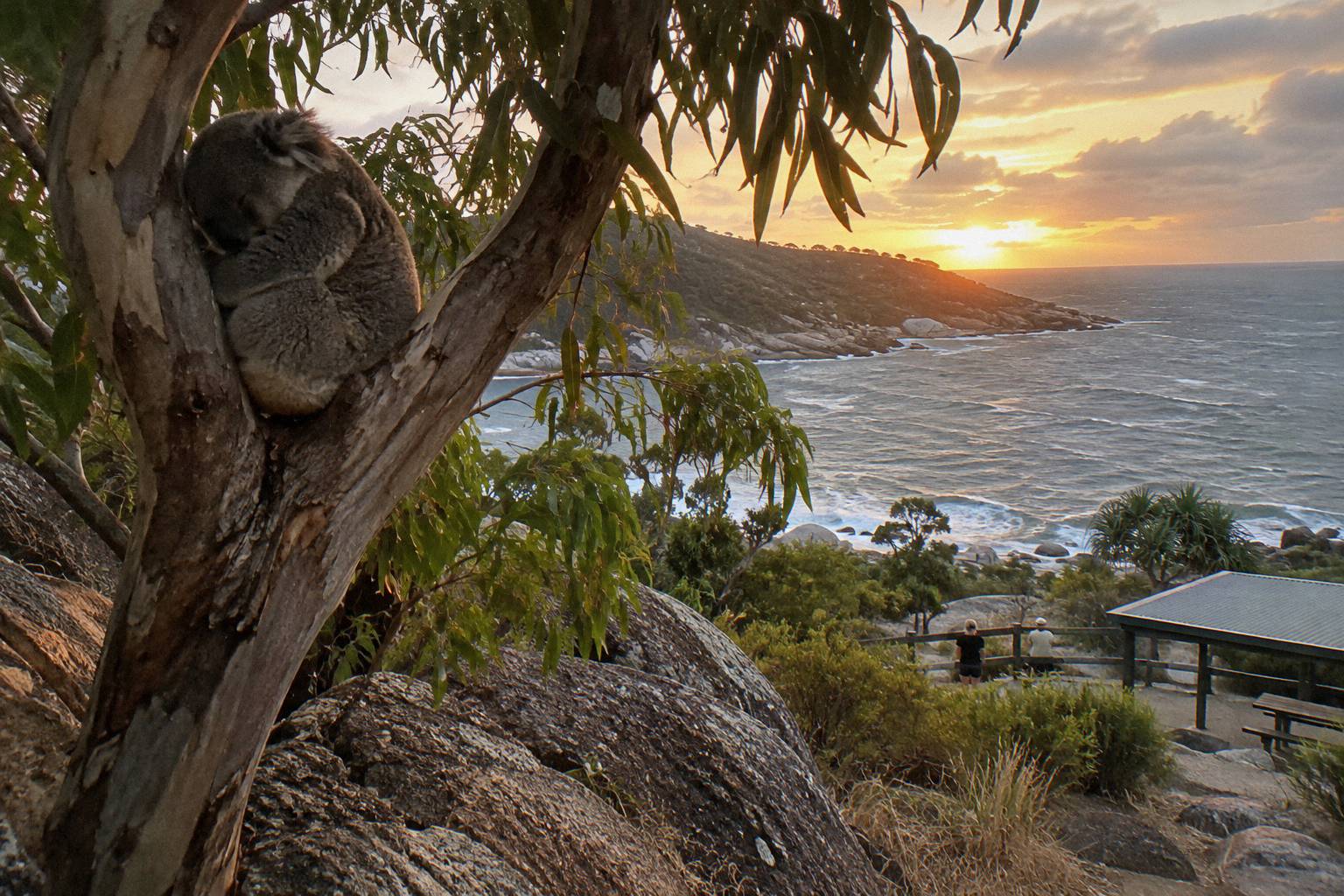
Photography deserves a specific note. A long lens from the track gets a better image than a phone at arm's length ever will, and it costs the koala nothing. Drones, calling out, or throwing anything to get the animal to look up are all behaviours the island community frowns on heavily. The official source for the koala population and its habits is the park service's own cultural and natural history page for the island, which is worth a read before any wildlife-focused visit.
There is one more safety angle that visitors rarely expect: the island's granite boulders shelter common death adders, whose camouflage among the rocks is effective. Stay on formed tracks, watch where you put your feet when stepping off to photograph, and give any basking snake the widest possible berth. None of this makes the island dangerous; it makes it wild, which is the point.
What Other Wildlife Shares The Island With The Koalas?
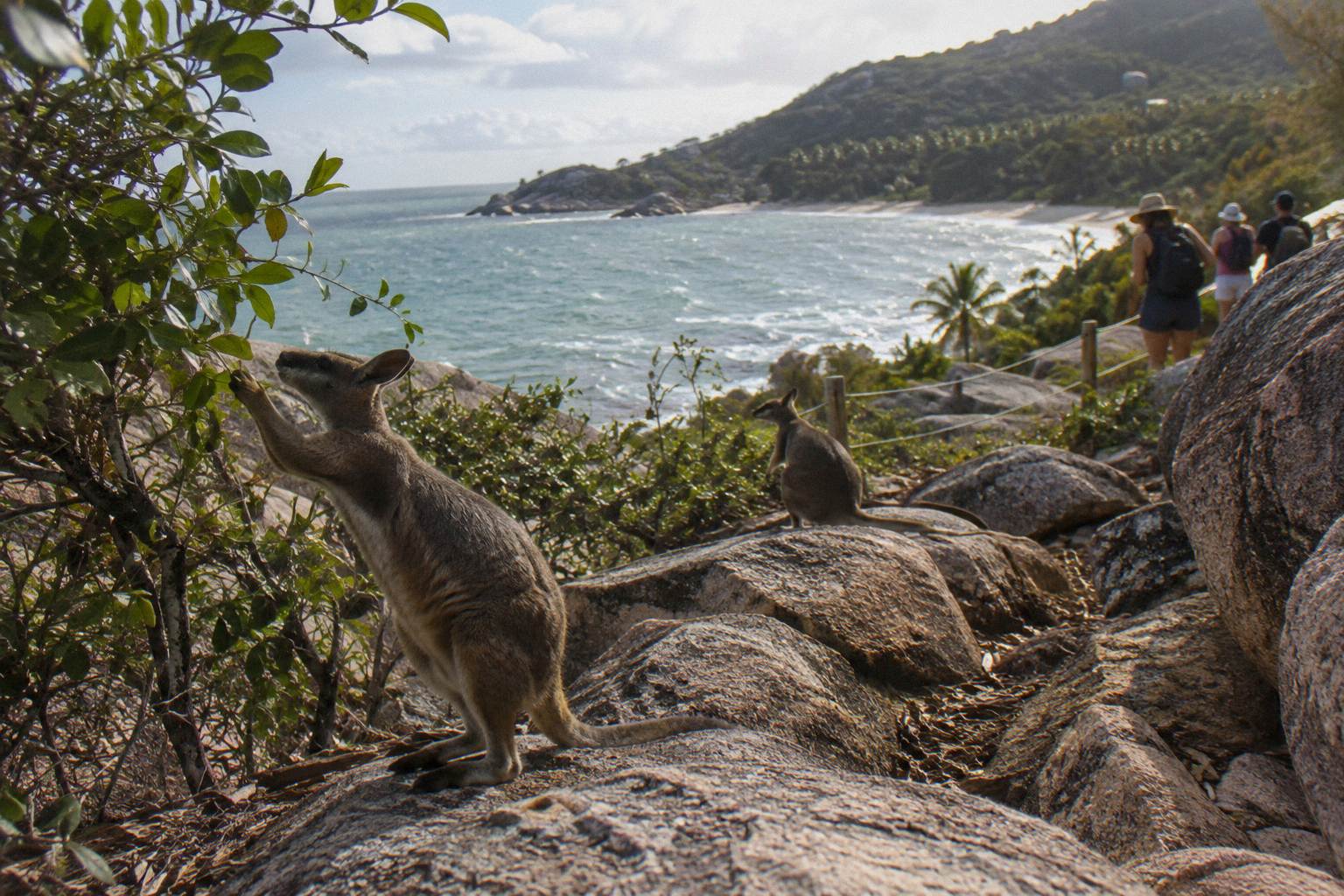
Allied rock-wallabies, Petrogale assimilis, are the island's other flagship mammal, living among the granite boulders and feeding in the early morning and late afternoon. The island also supports a range of reef and bird life around its fringe, from sea turtles over the coral of Arthur and Florence Bays to the waders of the west coast mudflats. A wildlife day here can be genuinely varied.
The rock-wallabies are the crowd pleaser. They stand 60 to 70 centimetres tall and live in small colonies among the large boulders and caves, according to the local care association, which notes their reliance on rocky refuges. Their subtle colouring camouflages them against the granite, so patience is rewarded: find a boulder field in the soft light of early morning or late afternoon and watch for movement rather than shape. The park service's advice is simply to look for them feeding at those times.
The koala and the wallaby between them anchor the island's terrestrial wildlife watching, but the marine fringe deserves its billing. The park service names Arthur Bay and Florence Bay as ideal for snorkelling straight off the beach, with sea turtles and a diversity of fish among the corals. There is a full guide to where the best snorkelling is around the island if water-based wildlife is on your list. The practical read for a wildlife-focused visit is that the island rewards a mixed day: koalas and wallabies at dawn and dusk, the reef in the middle of the day.
For an honest summary of every animal a guided wildlife day can turn up, from koalas and wallabies to turtles and reef fish, the site's rundown of what animals you can see on a wildlife tour is the companion piece to this one. It treats the same lineup of tours from the sighting side rather than the population side.
Which Tours Actually Help You See Koalas?
Three tours stand out for koala-focused visitors: the Behind the Scenes with Tim Bee tour, rated 4.9 from 205 reviews and priced from A$115; the History, Beaches and Wildlife Tour, rated 4.8 from 189 reviews from A$95; and the Koala Park entry, a wildlife park visit at Horseshoe Bay where the price shows when you check availability. A guided trip roughly doubles the search efficiency, because the guide knows the current feed trees.
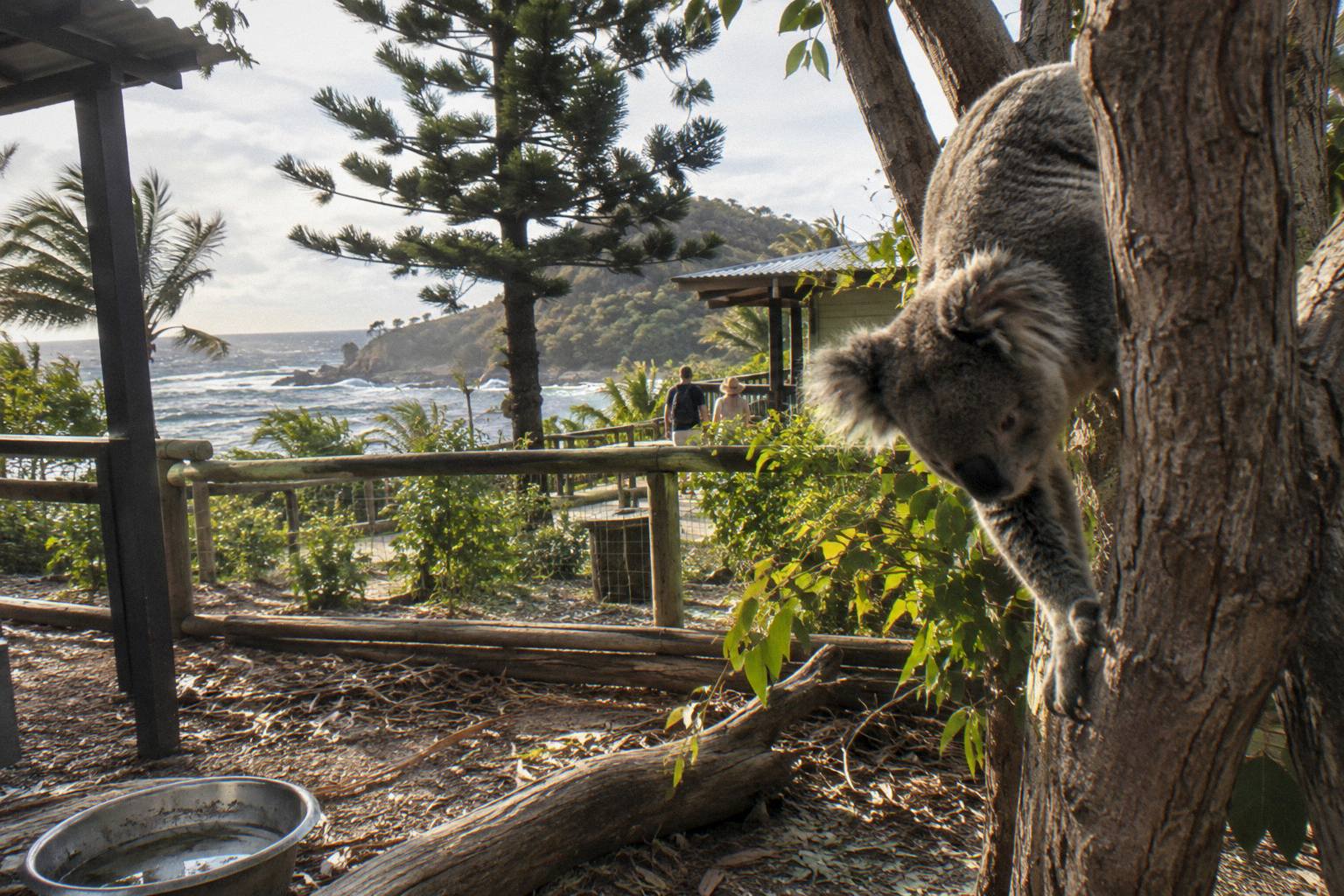
The table below sets out the options as the lineup lists them. Note what each one actually is: two are guided island drives that pass through koala habitat with a trained spotter, and one is a park entry where koalas are resident rather than wild.
| Option | Type | Koala angle | Rating | Price |
|---|---|---|---|---|
| Behind the Scenes with Tim Bee | 5-hour guided island tour | Guided look through koala habitat with a long-running local operator | 4.9 from 205 reviews | From A$115 |
| History, Beaches and Wildlife Tour | 5-hour guided island tour | Island circuit with wildlife stops, morning tea and island pickup; no ferry | 4.8 from 189 reviews | From A$95 |
| Koala Park Magnetic Island entry | Wildlife park entry | Ranger-guided native wildlife encounters at Horseshoe Bay | Price on check availability |
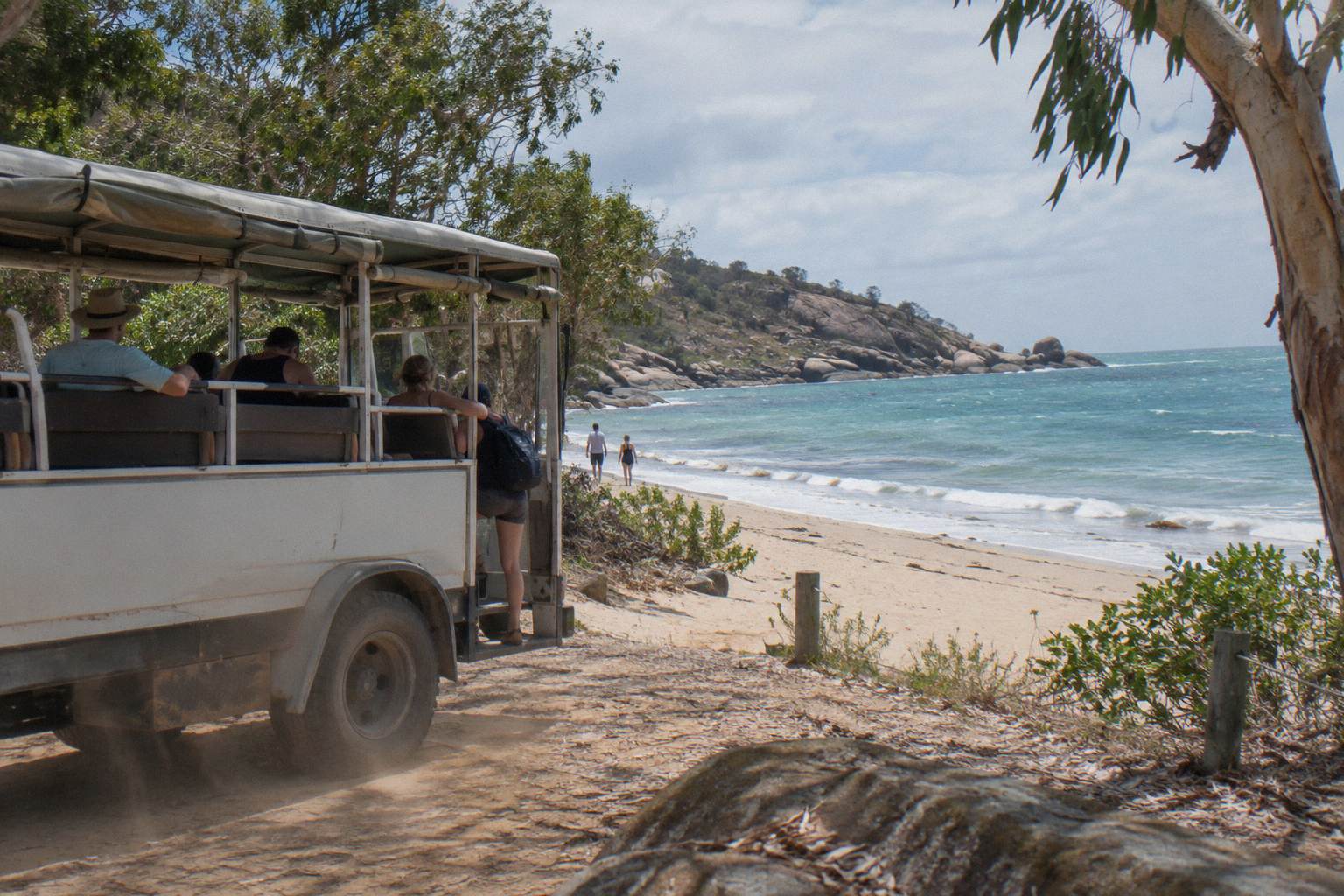
The Behind the Scenes tour deserves its top line. Tim Bee is a local operator whose trips have accumulated 205 reviews at an average of 4.9, one of the deepest review pools on the island's lineup, and the tour includes bottled water, national park entry fees and pickup from island accommodation; ferry tickets, lunch and snacks are extra. The magnetic appeal for a koala questioner is the guiding: a driver who works the island daily knows which trees have been feeding trees this week, which is exactly the local knowledge a self-guided visitor lacks.
The History, Beaches and Wildlife Tour is the same family of trip at a lower entry price and with the largest review pool of the two, 189 reviews at 4.8. It includes the ferry from Townsville, which matters if you are staying on the mainland and want everything bundled.
The Koala Park entry is the certainty play. At 40 Horseshoe Bay Road, it is a short hop from the Horseshoe Bay precinct where the jet ski and sailing operators also base themselves. Where a wild koala sighting is probable but never promised, a park sighting is the reason the place exists. Families with young children, or anyone on a tight schedule, often pair a morning on the Forts Walk with an afternoon park visit and get both experiences.
Do You Need A Tour To See Koalas?
No. The Forts Walk is a public, self-guided track with a car park at Forts Junction, and plenty of visitors find koalas on it alone. A tour adds trained eyes, transport and the ferry bundled, which matters if you have no car or only one day. Walkers with their own vehicle and a free morning can do it themselves at no cost beyond park entry.
The honest trade-off is knowledge versus freedom. A self-guided morning on the Forts Walk costs you nothing but time and gives you the park service's own recommended koala habitat. What it does not give you is the running commentary, the current-tree knowledge, or the wider island circuit that a guided day provides. The comparison of bus and 4WD sightseeing options covers the guided side in detail, and the site's guide to getting around without a car covers the independent side.
One planning note that ties the numbers together: because koalas feed late in the day and the guided tours typically run as morning or full-day departures, an independent walker has an advantage at the margins. The park service's own advice is to walk early, when animals are more active. A late afternoon self-guided walk on the Forts track, in the window the rock-wallabies also favour, is arguably the single best free wildlife experience on the island.
For everything a one-day visitor can pack around a koala search, whether self-guided or tour-based, the site's one-day island tour plan sequences the ferry, the Forts Walk and the bay stops into a workable day. On Magnetic Island Tours this site's role is to report the verified facts and point you to the operators that fit, and the koala question is one where the facts genuinely favour a visit.
Common Questions About Koalas On Magnetic Island
How Many Koalas Live On Magnetic Island?
A 2012 study estimated around 800 koalas. That is the only count in the official record, and no newer figure has been published, so treat it as a dated estimate rather than a live tally.
Are Koalas Native To Magnetic Island?
No. They were introduced in the 1930s from the mainland to protect them from perceived threats there, and the population established itself in the island's protected woodland.
Where Is The Best Place To See A Koala?
The Forts Walk, a 4 km return Grade 3 track from Forts Junction. The park service says there is a good chance of spotting a wild koala in the stunted trees along it. Walk early in the day when koalas are more active.
Is It Safe To Get Close To A Wild Koala?
No, and you should not. The island's care association warns koalas are easily stressed and may desert their young if approached. Keep your distance, stay quiet, and never feed wildlife in the national park.
Can You Hold A Koala On Magnetic Island?
This article covers the wild population and the wildlife park entry; the park at Horseshoe Bay offers ranger-guided native wildlife encounters. Check the park's live listing for what its current experiences include.
Which Tour Is Best For Koala Spotting?
The Behind the Scenes with Tim Bee tour, rated 4.9 from 205 reviews and from A$115, is the lineup's deepest-reviewed guided island trip through koala habitat. The History, Beaches and Wildlife Tour, 4.8 from 189 reviews from A$95, is the close alternative.