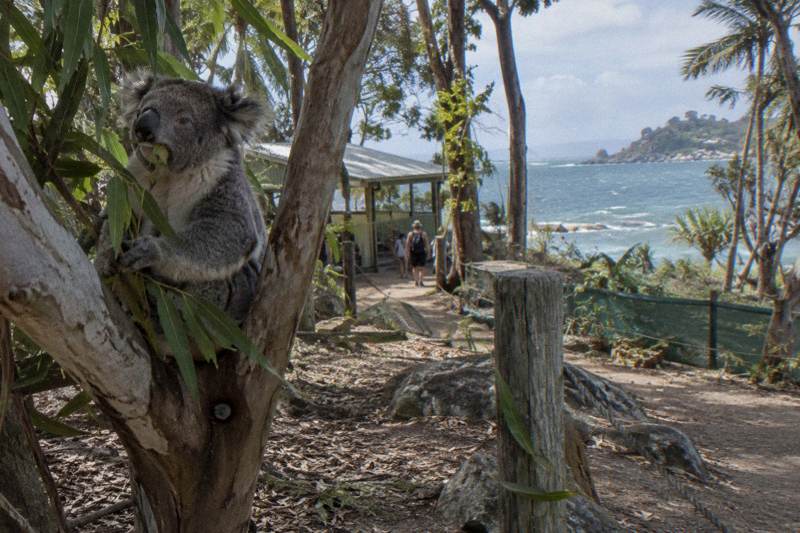
What Animals Can You See On A Magnetic Island Wildlife Tour?
A documented guide to the animals a Magnetic Island wildlife tour can show you: koalas, allied rock-wallabies, sea turtles and reef fish, plus which tours mention wildlife.
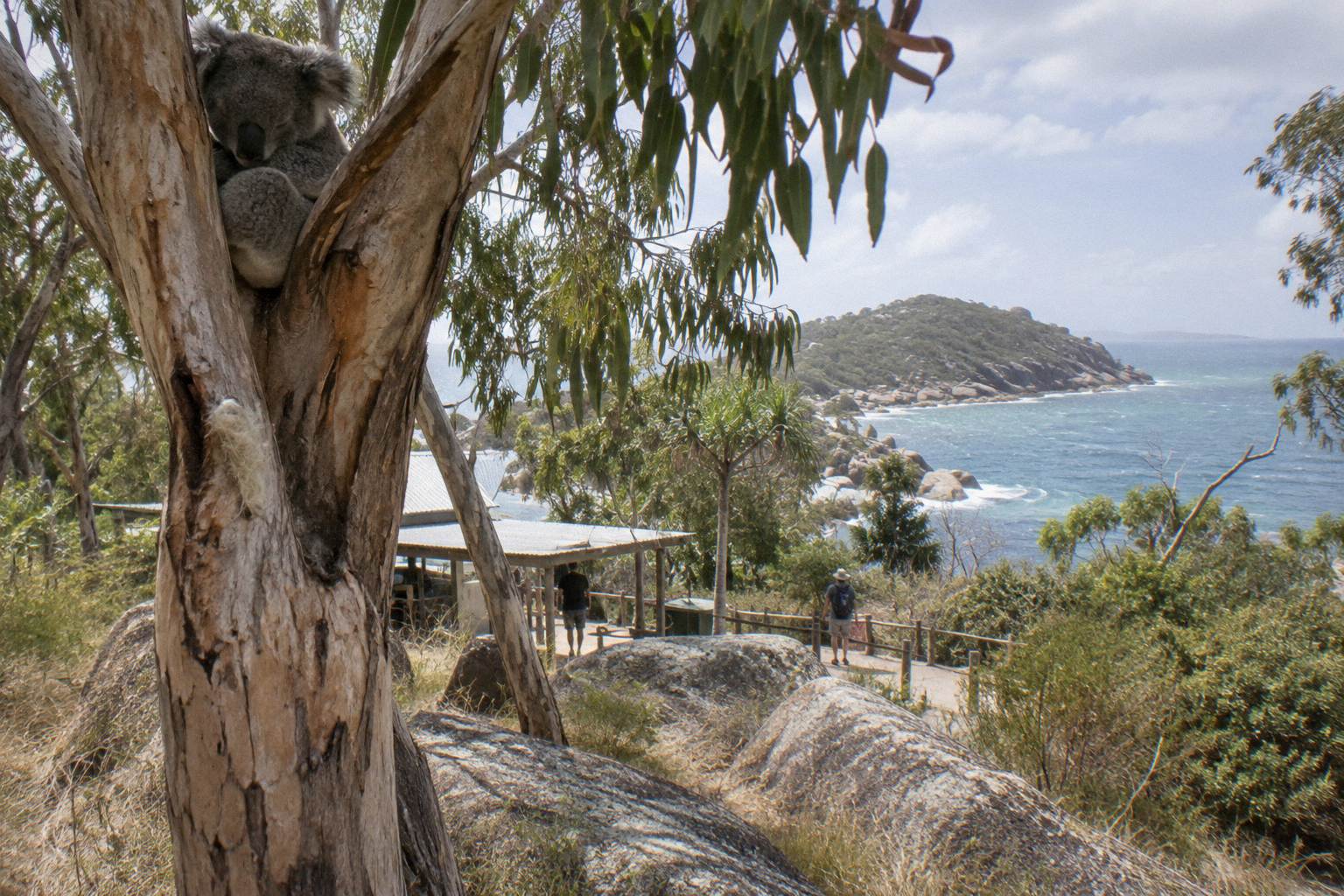
A Magnetic Island wildlife tour can realistically put you in front of wild koalas, allied rock-wallabies, sea turtles, reef fish and a long list of birds, because 78 percent of the island's 5,184 hectares is national or conservation park sitting inside the Great Barrier Reef World Heritage Area. The documented stars are koalas, introduced in the 1930s and now numbering around 800 by a 2012 study estimate, and rock-wallabies that live among the granite boulders. What no honest tour can do is promise a sighting, and this page separates what the official record says from what marketing copy claims.
The island's wildlife story is unusual in one respect that matters for tour choice. Koalas are not native here. They were brought across in the 1930s to shield them from perceived threats on the mainland, and the population that grew from that translocation is now one of the most reliable wild koala viewing opportunities in Queensland. Allied rock-wallabies, by contrast, are at home among the boulders, and their camouflage makes them harder to spot than most visitors expect.
Tours approach this wildlife in three ways. Land tours drive and walk the koala habitat, boat and snorkel tours add the marine layer, and a wildlife park on the island guarantees close-up native animals even when the wild ones stay hidden. The trio below spans all three approaches.
The documented land animals are koalas, allied rock-wallabies and the island's snake and bird life, while the documented marine animals are sea turtles, reef fish and, in season, whales. Queensland Parks and Wildlife Service confirms koalas along the Forts Walk, allied rock-wallabies among the granite boulders, and Arthur Bay and Florence Bay as places where you swim with sea turtles and a diversity of fish straight off the beach.
That short list is shorter than most tourism copy suggests, and that is worth understanding before you book. The park service's own pages name exactly three mammal headline species with confidence: koalas, allied rock-wallabies, and the flying foxes and gliders that appear in its general wildlife descriptions. Everything else, from possums to the island's many recorded bird species around varied habitats, is real but is not something a park page promises at any particular spot.
The marine layer is where the numbers get richer. The fringing coral reefs that ring the bays hold the usual Great Barrier Reef cast: turtles, parrotfish, wrasse, and the smaller fish that live among corals and seaweed. Humpback whales pass through these waters between May and September, and Aquascene lists whale watching as a seasonal extra on its circumnavigation tour in those months, but no operator can promise a whale on any given day.
Where Does QPWS Say Each Animal Lives?
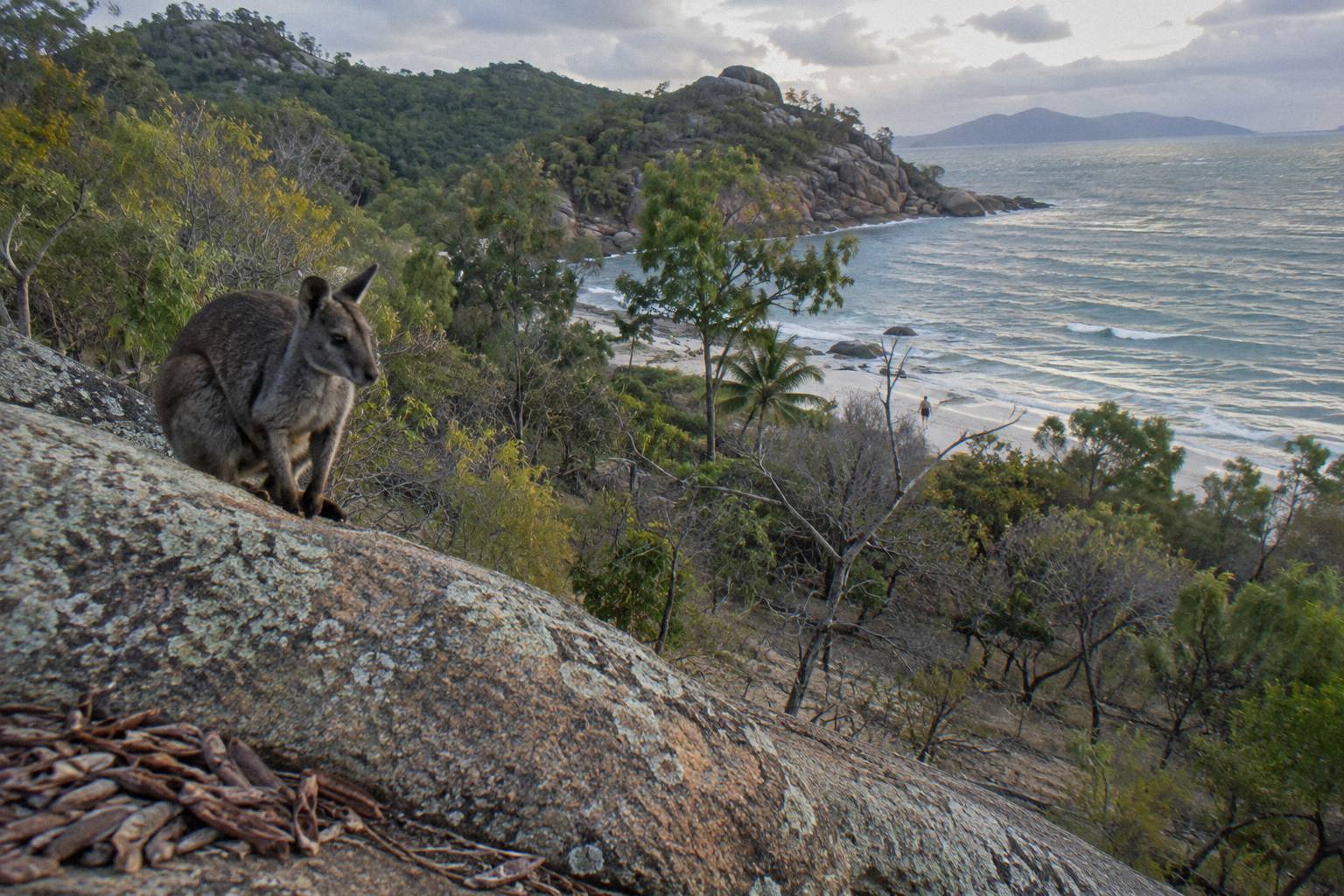
Queensland Parks and Wildlife Service places koalas along the Forts Walk through eucalypt and acacia woodland, allied rock-wallabies among the granite boulders where they feed in the early morning and late afternoon, and turtles and reef fish at Arthur Bay and Florence Bay where fringing reef is reachable straight from the beach.
The koala guidance is the most specific in the park record. The Forts Walk, a 4 km return Grade 3 track starting at Forts Junction between Arcadia and Horseshoe Bays, runs through stunted eucalypt and acacia woodland where the park service says there is a good chance of spotting a wild koala in the trees. Its own advice is to walk early in the day: it is cooler, parking is easier, and koalas and other wildlife are more active. Koalas rest in branches by day and feed in the late afternoon, which shapes the timing of the better land tours.
The wallaby guidance is deliberately vaguer, and honest tours keep it that. The park service says allied rock-wallabies live among the granite boulders in rocky terrain and dense vegetation, and that their subtle colouring makes them difficult to see among the rocks. It does not name Geoffrey Bay, Arthur Bay or any other specific viewing spot, so any tour or article that promises wallabies at a named bay is going beyond the official record. What the record does say is when to look: early morning and late afternoon feeding times.
| Animal | Where the official record places it | When to look | Can a tour promise it? |
|---|---|---|---|
| Koala (introduced 1930s) | Along the Forts Walk, in eucalypt and acacia woodland | Early morning and late afternoon, most active | No, but the Forts Walk is the documented hotspot |
| Allied rock-wallaby | Among granite boulders, rocky terrain and dense vegetation | Early morning and late afternoon feeding | No, and no official source names a specific bay |
| Sea turtles | Arthur Bay and Florence Bay, over fringing reef | Daytime, in and on the water | No, but these are the documented snorkel bays |
| Reef fish | Fringing coral reefs around the bays | Daytime | Realistic on any snorkel tour |
| Humpback whales | Passing waters, season May to September | Mid-year only | No, listed only as a seasonal extra |
| Common death adder | Camouflaged among the granite | Any time, rarely seen | No, and no tour should promise one |
The local care group adds useful colour on the wallabies. The Magnetic Island Nature Care Association describes allied rock-wallabies as 60 to 70 cm tall, living in small groups or colonies among large boulders and caves that contain a maze of passageways, and it asks visitors who see a koala to keep their distance because koalas are easily stressed and may desert their young. The same principle appears in park rules: feeding wildlife is not allowed in Magnetic Island National Park because it can affect their health and alter the natural population balance.
If wildlife viewing from the water also appeals, the Aquascene circumnavigation boat tour includes snorkelling gear, paddleboards and seasonal whale watching as a bonus rather than a promise.
Which Tours Mention Wildlife?
The clearest wildlife mentions sit in the island-and-wildlife category. The "History, Beaches & Wildlife Tour" runs 5 hours from A$95 with light morning tea, national park entry, bottled water and free island pickup included (ferry tickets and lunch are extra), holds a 4.8 rating from 189 reviews, and its own name declares the wildlife angle. The "Behind the Scenes with Tim Bee" tour, also 5 hours with bottled water, national park entry and island pickup (ferry and lunch are not included), is the second most reviewed land product at 4.9 from 205 reviews, from A$115. The Afternoon Tour, 3 hours with a 4.9 rating from 48 reviews, covers the same island ground in a shorter window. The West Coast Eco Adventure, 3 hours 30 minutes rated 4.8 from 62 reviews, adds two to three short walks to its bus route. More of these guides are collected on Magnetic Island Tours.
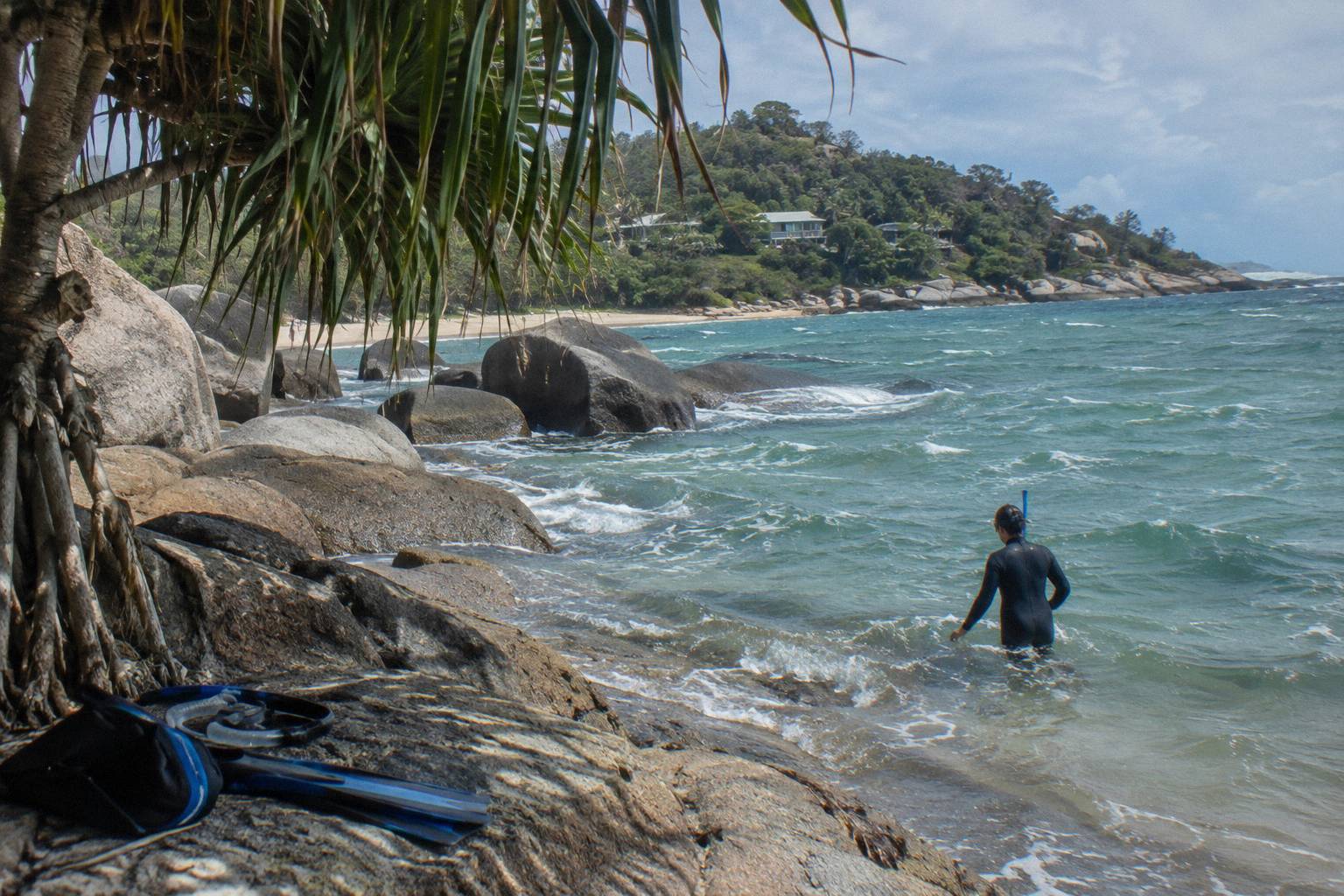
The marine side mentions wildlife differently. Aquascene's "Snorkel Discovery Tour", from A$179 and rated 4.9 from 301 reviews, is the most reviewed product here and centres on the reef animals of the bays, with seasonal bonus whale watching on the circumnavigation version from A$179, rated 4.8 from 22 reviews. The jet ski circumnavigation lists marine encounters among its inclusions, and the Five Beach Bay loop, rated 5.0 from 26 reviews, reaches bays accessible only by ocean where the animals are less disturbed. The reef and dive trips from Adrenalin Snorkel and Dive add the Museum of Underwater Art and the central Great Barrier Reef's larger marine life.
| Tour | Type | Price | Rating | Wildlife angle |
|---|---|---|---|---|
| Behind the Scenes with Tim Bee | Land, 5 hours | from A$115 | 4.9 from 205 reviews | Guided island wildlife and history, park entry and island pickup included; ferry and lunch extra |
| History, Beaches & Wildlife Tour | Land, 5 hours | from A$95 | 4.8 from 189 reviews | Beaches plus wildlife stops, park entry included |
| West Coast Eco Adventure | Land, 3 hours 30 minutes | price shows when you check availability | 4.8 from 62 reviews | Eco bus with two to three short walks |
| Afternoon Tour | Land, 3 hours | price shows when you check availability | 4.9 from 48 reviews | Short guided island circuit |
| Koala Park entry | Wildlife park | price shows when you check availability | no reviews listed | Guaranteed close-up native animals at Horseshoe Bay |
| Snorkel Discovery Tour | Water | from A$179 | 4.9 from 301 reviews | Turtles and reef fish on fringing reef |
| Aquascene Circumnavigation | Water | from A$179 | 4.8 from 22 reviews | Snorkel stops plus seasonal whale watching bonus |
| Jet Ski Five Beach Bay Loop | Water, 2 hours 30 minutes | price shows when you check availability | 5.0 from 26 reviews | Eight bays, seven reachable only by ocean |
Can A Tour Guarantee You Will See A Koala?
No tour can guarantee a wild koala sighting, and none claims to; what the record supports is that the Forts Walk offers a good chance of spotting one, that early morning and late afternoon are when koalas are most active, and that a guided tour greatly improves your odds because guides know where recent sightings cluster.
The park service's wording is careful for a reason. Koalas sleep through much of the day in the fork of a eucalypt branch, and a grey-brown ball high in a stunted tree is easy to walk past unless someone points at it. Guides on the island's land tours do exactly that, and the 4.9 from 205 reviews behind the Behind the Scenes with Tim Bee tour reflects how often that works out. This is also why the tour's structure matters: a 5-hour window with a guide who drives the koala roads and walks the habitat beats a self-guided hour.
The guaranteed alternative is The Koala Park at 40 Horseshoe Bay Rd, near the top of the island. Its entry product, offered by Bounce Koala and Wildlife Park, covers koalas and other native animals with rangers, at a price that shows when you check availability. Wildlife parks fill the gap that wild animals leave, which is a fair trade for families with small children or anyone on a tight schedule. Our guide to Koala Park tickets breaks down what entry covers.
What Marine Animals Can You See From A Tour Boat?
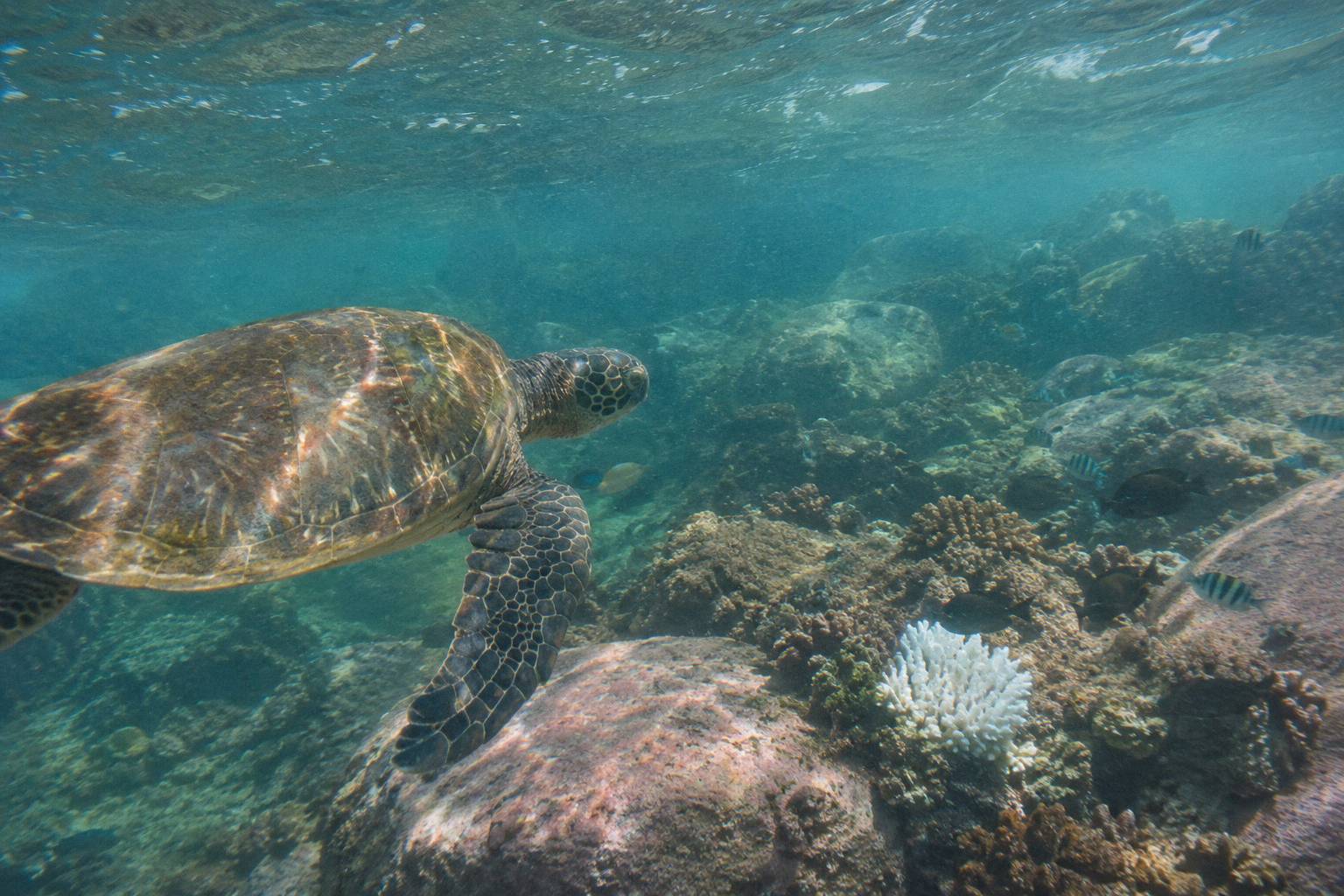
The documented marine animals are sea turtles, a diversity of reef fish among corals and seaweed, and seasonal humpback whales between May and September; dolphins, dugongs and reef sharks appear in these waters but are not promised by any operator.
The fringing reef is the engine of the marine wildlife. The park service describes Arthur Bay and Florence Bay as ideal for snorkelling where the fringing reef is accessible straight from the beach, and says swimmers share that water with sea turtles and a diversity of fish living among the corals and seaweed. Any tour that snorkels those bays, from the Aquascene products to the guided jet ski tours with beach swimming, puts you in that habitat rather than watching it from a deck.
The seasonal layer matters for timing a booking. Humpback whales migrate through the Great Barrier Reef region between May and September, and the Aquascene circumnavigation lists bonus whale watching in those months without making it a headline promise. If whales are the reason you are travelling, the best time to visit for tours guide maps the seasons against the tour calendar; mid-year also brings the cooler water that sees wet suits supplied on snorkel tours between June and September.
One honest note on the animals people ask about and the record does not document here. Crocodiles are a mainland estuary animal, and our piece on whether crocodiles occur where you snorkel or kayak covers the geography. Reef sharks are present on the Great Barrier Reef and are generally a curiosity rather than a hazard, which we examine in are there sharks on a snorkel trips. Neither appears as a promised animal on any Magnetic Island tour.
When Is The Best Time Of Day For Wildlife?
Early morning and late afternoon are the documented wildlife windows, because koalas and rock-wallabies feed at those times and the park service explicitly advises walking the Forts Walk early when it is cooler and animals are more active; midday suits marine life, when the light on the reef makes turtles and fish easiest to see.
The land schedule writes itself from the official advice. Koalas feed in the late afternoon and are more active early in the day; wallabies feed in the early morning and late afternoon. The full-day and 5-hour land tours that pick up from island accommodation and include the Forts country are effectively built around those windows, which is a better use of your money than a midday self-drive loop that finds every koala asleep and every wallaby invisible in the rocks.
The marine schedule is the opposite. Snorkel tours run through the middle of the day for light and usually calmer wind, which suits turtles and reef fish viewing. That split, land mornings, water middles, is the logic behind our one day tour plan for the island, and it is also why a 5-hour land tour that finishes mid afternoon pairs so cleanly with a morning or late jet ski circuit.
| Time of day | Land wildlife | Marine wildlife | Best fit |
|---|---|---|---|
| Early morning | Koalas and wallabies most active, per QPWS advice | Calm water, good light for paddling | Behind the Scenes with Tim Bee, 5 hours |
| Middle of the day | Koalas resting, harder to spot | Best light on the reef, turtles and fish visible | Snorkel Discovery Tour, from A$179 |
| Late afternoon | Wallaby feeding window returns | Jet ski circuits in softer light | Afternoon Tour, 3 hours, 4.9 from 48 reviews |
| Mid-year, May to September | Cool season, comfortable walking | Humpback whales passing, wet suits supplied June to September | Aquascene Circumnavigation, seasonal whale bonus |
Which Tour Should You Book For Wildlife?
Book the Behind the Scenes with Tim Bee tour for the strongest documented odds on koalas and wallabies with a guide, the History, Beaches & Wildlife Tour for the same ground at a lower price from A$95, the Snorkel Discovery Tour for turtles and reef fish from A$179, and Koala Park entry for a guaranteed close-up regardless of what the wild animals do that day.
Those four answers map to four different buyers. If wildlife is the whole reason for the trip, the 5-hour guided land tour is the one to book first: it walks the koala habitat in the right windows with someone who knows where the recent sightings are, and the guide and island pickup remove most of the logistics. If budget leads, the A$95 History, Beaches & Wildlife Tour covers similar ground with the same operator. If the marine animals matter as much as the land ones, pair a land morning with the Aquascene snorkel product, which is the most reviewed tour at 4.9 from 301 reviews. If you are travelling with small children or on a winter day when the walks look unappealing, Koala Park entry at Horseshoe Bay is the certainty play.
Cancellation terms matter when wildlife is weather-dependent. The Behind the Scenes tour, the History, Beaches & Wildlife Tour and the Afternoon Tour do not list confirmed free cancellation, while the Aquascene products, the jet ski circumnavigation and the Koala Park entry either confirm 24-hour free cancellation or leave the term unstated; check the live booking page for the tour you choose before paying, and remember Aquascene's own policy is to contact you to cancel, offer an alternative date, or refund in full when weather stops the boat.
The full spread of options, from the guided land tours to the wildlife park and the reef trips, is below. Whichever you choose, the animals are real, the numbers are healthy, and what any operator can promise is the right habitat at the right time of day.
Common Questions About Magnetic Island Wildlife Tours
What Animals Can You See On A Magnetic Island Wildlife Tour?
The documented animals are koalas (introduced in the 1930s, around 800 by a 2012 study estimate), allied rock-wallabies among the granite boulders, sea turtles and reef fish on the fringing coral, and seasonal humpback whales between May and September. QPWS names the Forts Walk for koalas and Arthur Bay and Florence Bay for snorkelling with turtles and fish.
Can You Guarantee Seeing A Koala On Magnetic Island?
No tour guarantees a wild koala, and none claims to. The park service says the Forts Walk offers a good chance of spotting one, especially early in the day or in the late afternoon feeding window. The Koala Park at Horseshoe Bay is the guaranteed close-up alternative.
Where Can You See Rock-Wallabies On Magnetic Island?
The park service says allied rock-wallabies live among the granite boulders in rocky terrain and dense vegetation and feed in the early morning and late afternoon. It does not name any specific bay as a viewing spot, so treat bay-level wallaby claims in tourism copy with caution.
Can You Hold A Koala On Magnetic Island?
Queensland law restricts koala handling, and the official record for the island's parks does not confirm a hold-a-koala experience. Local care guidance asks visitors to keep their distance from wild koalas because they are easily stressed. See our separate guide on holding a koala on Magnetic Island for what is on the record.
Are There Whales On Magnetic Island Tours?
Humpback whales pass through the region between May and September, and the Aquascene circumnavigation boat tour lists bonus whale watching as a seasonal extra in those months. No operator promises a whale on any given departure, so treat it as a possible bonus rather than a booked experience.
Which Is The Best Wildlife Tour For Families?
The History, Beaches & Wildlife Tour, from A$95 with light morning tea, park entry and island pickup included (ferry and lunch are extra), suits families wanting the land animals in one easy 5-hour block, while Koala Park entry guarantees close-up native animals for younger children. Both are bookable through this site's tour pages.