Are There Koalas On Magnetic Island, And Can A Koala Tour Find Them?
Yes, Magnetic Island has wild koalas, introduced in the 1930s and now numbering around 800. Here is where they live, which tours pass through koala country, and how to spot one responsibly.
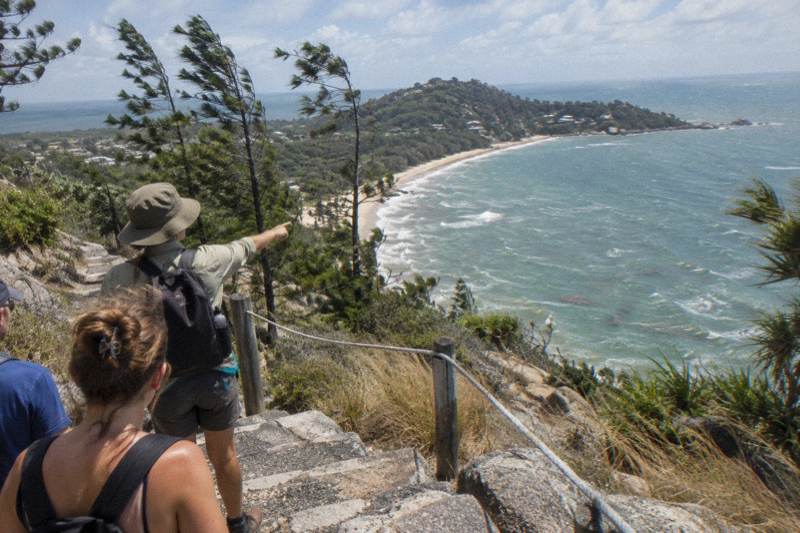
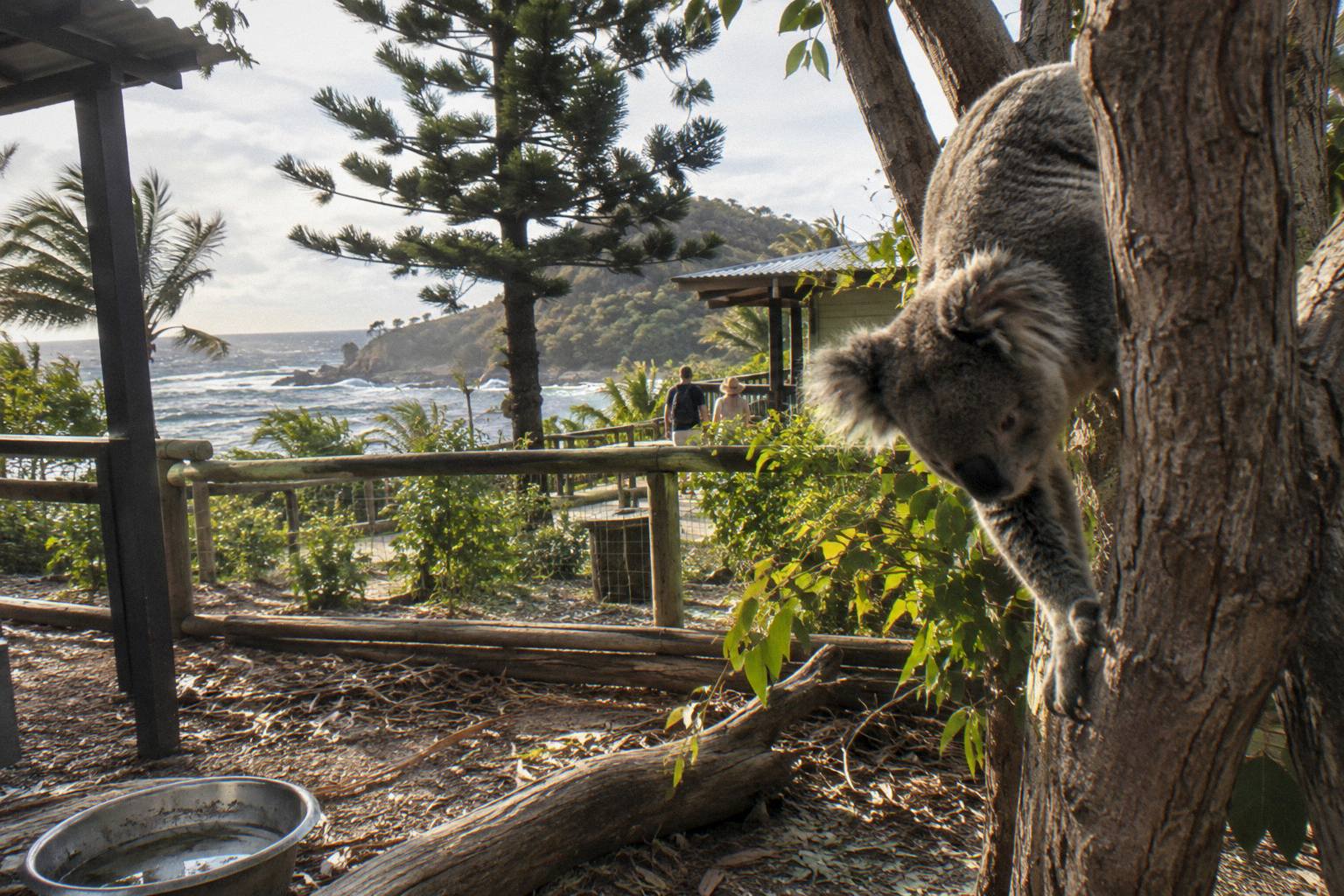
Yes, koalas live wild on Magnetic Island, and a guided tour through the right country gives you a real, though never guaranteed, chance of seeing one. Queensland's park service states plainly that koalas can be seen along the Forts Walk, and several tours drive or walk through that same eucalypt woodland daily. The right tour does not promise a koala, but it puts you in the habitat with a guide who knows the recent sightings.
The koala story here is unusual, and it is worth knowing before you book anything. Koalas are not native to Magnetic Island. They were introduced in the 1930s, moved from the mainland to protect them from perceived threats there, and the island suited them. A study in 2012 estimated the island supports a population of around 800 koalas, a figure the Queensland Parks and Wildlife Service still cites. For an island whose entire land area is 5,184 hectares, about 78 percent of it national or conservation park, that is a genuinely dense koala population, which is why this island has a reputation among wildlife watchers that far larger mainland forests do not.
The catch is that density does not translate into easy sightings. Koalas sleep for most of the day, folded into the forks of eucalypt branches, and their grey fur against grey bark makes them surprisingly hard to pick out. The park service's own wording is careful: along the Forts Walk there is "a good chance of spotting a wild koala in the stunted trees". A good chance is not a certainty, and any tour operator who promises you a koala is overselling. What a tour adds is local knowledge, fresh sighting reports, and a set of eyes that scans the canopy professionally rather than hopefully.
The distinction matters for planning. A wild sighting on a bush track is free but uncertain. A wildlife park gives you a guaranteed koala at close range, in a setting where rangers explain the animals, but it is not the same experience as finding one yourself in a gum tree above a walking trail. Most visitors with a full day do both: a tour through the bush in the morning, when koalas and other wildlife are more active, and a park visit or a beach afternoon afterwards.
Where Do Koalas Live On The Island?
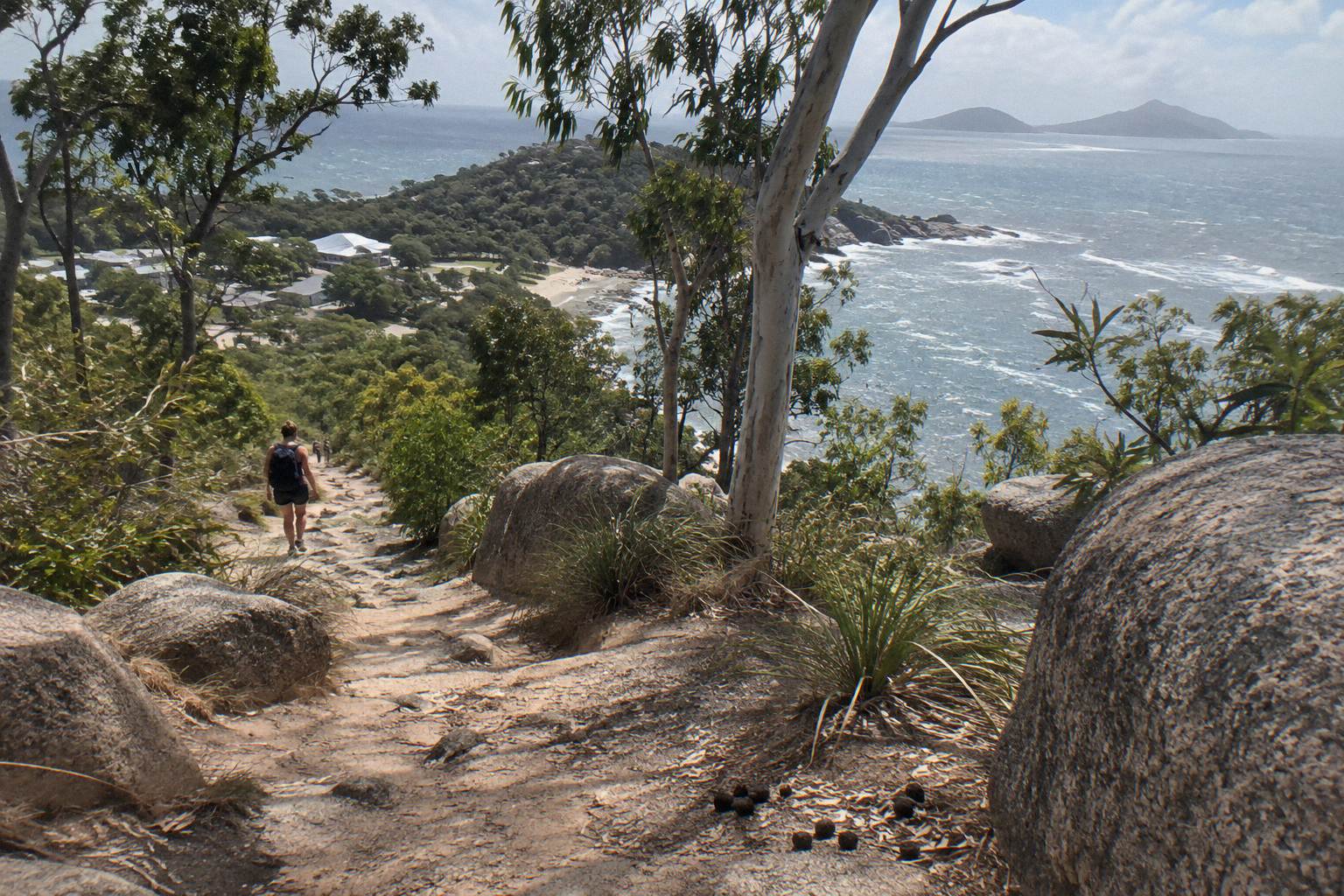
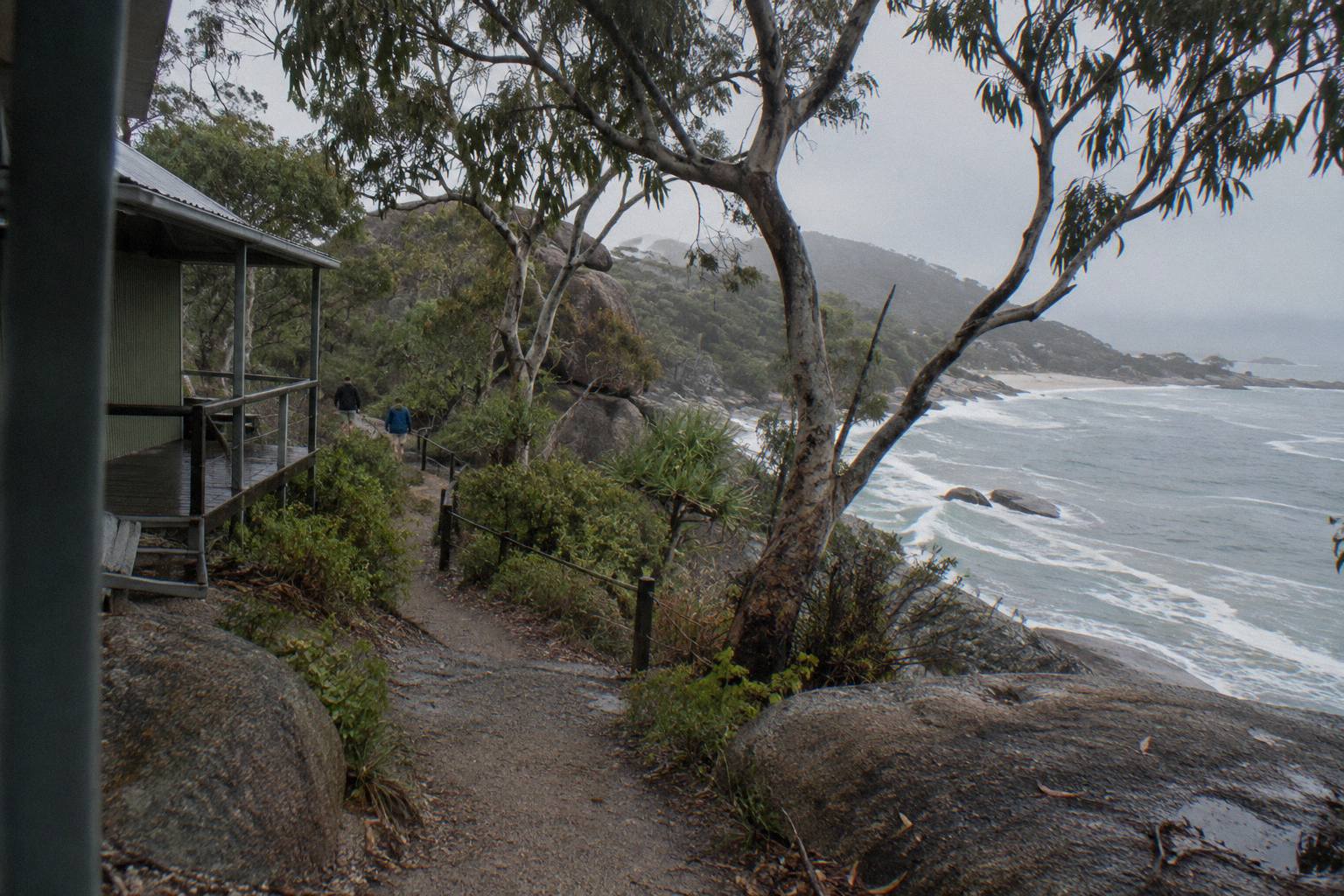
Koalas live in the eucalypt and acacia woodland covering the island's eastern and central hills, with the Forts Walk between the Arcadia and Horseshoe Bay sides the best documented stretch. Koalas rest in eucalypt branches by day and feed in the late afternoon, and the park service recommends walking early, when it is cooler and wildlife is more active. The woodland, not the beaches or the bays, is where you look.
The terrain explains the habitat. Magnetic Island's landscape is granite boulders, hoop pines on the headlands, sandy beaches and fringing reefs, and between the boulders grows the low eucalypt and acacia woodland koalas favour. The stunted trees on the Forts Walk are singled out by the park service precisely because koalas there sit low and in small trees, which makes them easier to see than they would be in tall forest. That is a small piece of luck built into the island's geography.
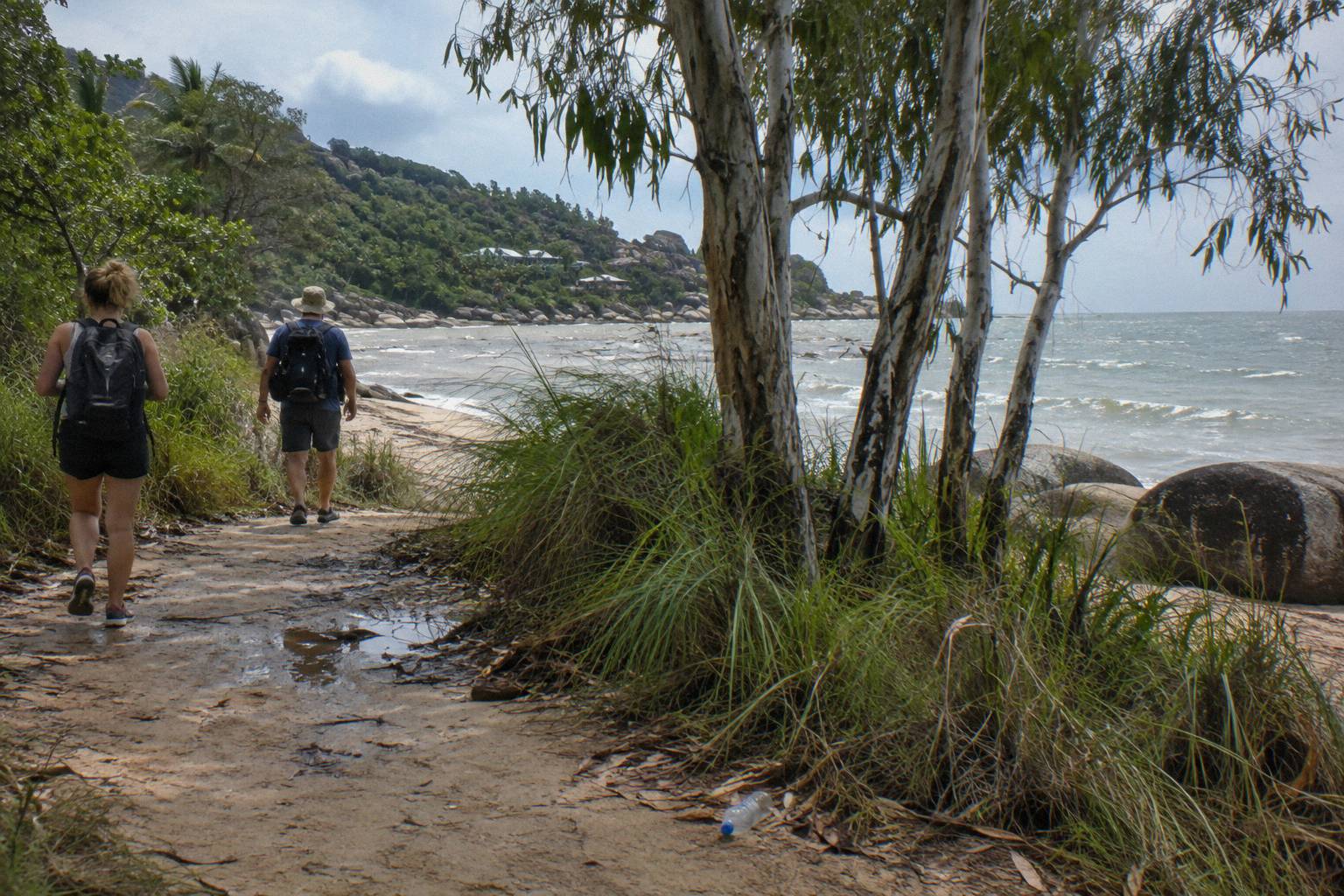
Timing shapes your odds as much as location does. Koalas are marsupials that sleep up to 18 or 20 hours a day, and their active feeding window is late afternoon into the evening. The park service advises visiting the Forts Walk early in the day for two reasons: it is cooler, and wildlife is more active. On a hot afternoon a koala will be a grey ball high in a fork, doing precisely nothing. In the first hours of daylight, or in the last, you may catch one moving along a branch or feeding, which is the sighting people remember.
Here is how the settings on the island break down for a visitor deciding where to spend wildlife time:
| Setting | Koala likelihood | What it offers |
|---|---|---|
| Forts Walk bush track | Good chance of a wild sighting, park service wording | Free, 4 km return, Grade 3, self-guided or with a tour |
| Island bus and van tour routes | Possible from the vehicle on bush-fringed roads | Guided, covers more ground than walking, guide watches the canopy |
| The Koala Park, Horseshoe Bay | Guaranteed koalas in a managed park | Close-up viewing, ranger guidance, entry price shows when you check availability |
| Beaches and bays | Not koala habitat | Turtles, fish and rock wallabies instead, not koalas |
One point of etiquette that the island's wildlife carers feel strongly about: if you see a koala, keep your distance. The Magnetic Island Nature Care Association notes koalas are easily stressed and may desert their young if approached or crowded. Photograph from the track, keep noise down, and never attempt to touch a wild animal. Feeding wildlife is not allowed anywhere in the national park. A good tour reinforces this, because guides manage the group's behaviour around a sighting rather than letting everyone crowd the tree.
Which Tours Take You Through Koala Country?
Several island tours run through koala habitat or finish at a koala venue. The five-hour bus tours cross the island's bush roads where sightings happen from the window, while the Forts Walk itself can be combined with a tour day. The wildlife park entry is the guaranteed option, with koalas and other native animals at Horseshoe Bay. Choosing between them is mostly a choice between a wild chance and a certainty.
The strongest wild-habitat option on the lineup is the Magnetic Island: Behind the Scenes with Tim Bee tour, a five-hour loop rated 4.9 from 205 reviews, from A$115, with island pickup and park entry included and the ferry and lunch extra. What makes it a koala-country tour is not a koala stop as such, it is the route and the guiding. Five hours with a longtime local operator covers the island's back roads and bush edges, the exact country where koalas show up, and a guide who runs the same loop daily knows yesterday's sighting tree. The tour also carries the island's history and stories, so a slow morning scanning the canopy is never wasted time even if no koala appears. It is the tour this site features for exactly this question, and it links naturally with reading about where to see wild koalas around the island.
The sibling option is Magnetic Island: History, Beaches & Wildlife Tour, also five hours, rated 4.8 from 189 reviews, from A$95, with pickup from island accommodation; the ferry fare from Townsville is extra. The emphasis splits between the island's past and its animals, and the air-conditioned vehicle covers enough ground that roadside sightings are a genuine possibility. For a visitor staying in Townsville who wants koala country without hiring a car, this is the simplest package: ferry across (booked separately), get collected, spend the day being driven and guided.
The certainty option is The Koala Park Magnetic Island, at 40 Horseshoe Bay Road, Horseshoe Bay. Entry gives you koalas and other native wildlife in a managed setting with rangers, and the entry price shows when you check availability. It is the right choice for families with small children, for anyone with limited mobility who cannot manage a Grade 3 bush track, and for photographers who want a close subject. It does not replace the wild experience, it complements it, and combining both in one day is entirely doable given the park's location right in Horseshoe Bay.
This table sets the three against each other:
| Tour | Duration | Rating | Price | Koala angle |
|---|---|---|---|---|
| Behind the Scenes with Tim Bee | 5 hours | 4.9 from 205 reviews | from A$115 | Bush roads and local guiding through koala habitat, island pickup and park entry included |
| History, Beaches & Wildlife Tour | 5 hours | 4.8 from 189 reviews | from A$95 | Island loop by bus, wildlife stops, morning tea and island pickup; no ferry |
| The Koala Park entry | Own pace | No reviews printed | Price shows when you check availability | Guaranteed close-up koalas with rangers, Horseshoe Bay |
A note on honesty in the ratings: these figures come from each tour's live listing, and review pools on a small island are modest. A 4.9 from 205 reviews is a strong, well-supported rating. Treat any tour with no printed reviews as simply unrated rather than reading anything into it.
How Likely Is A Wild Koala Sighting On The Forts Walk?
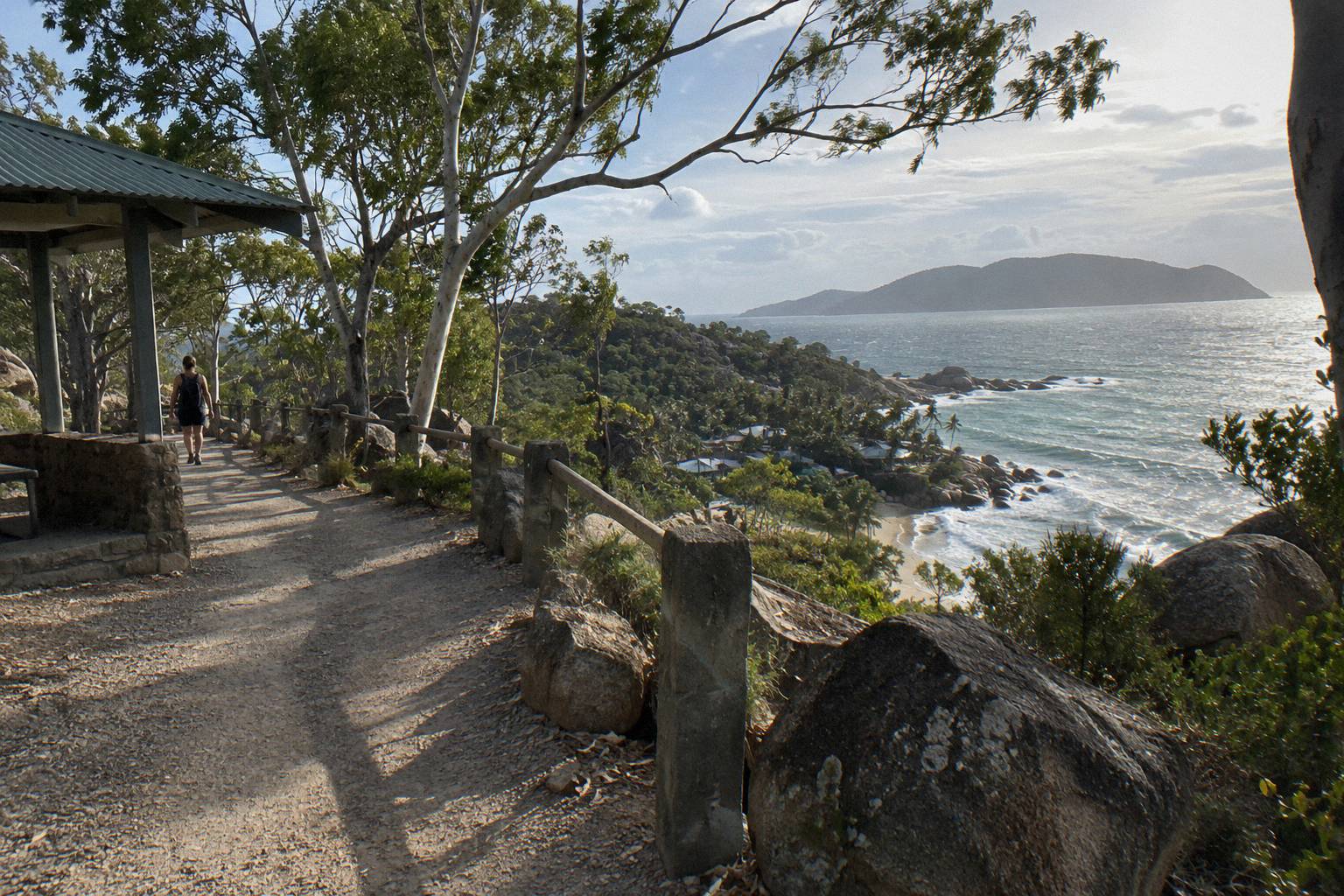
Honest answer: likely enough that the park service advertises it, not certain enough to plan around. The official wording is that there is a good chance of spotting a wild koala in the stunted trees along the walk, and that walking early helps. With roughly 800 koalas on 5,184 hectares, the odds per kilometre of suitable track are among the best in Queensland, but koalas sleep most of the day, so a sighting still takes scanning and patience.
The Forts Walk itself is a 4 km return track, Grade 3, with a suggested walking time of two hours, starting from Forts Junction on the main road between the Arcadia and Horseshoe Bay sides. It climbs gently through exactly the woodland the koalas use, and it carries a bonus: the walk protects the best-preserved Second World War coastal defence fortifications in Queensland, a heritage-listed signal station and coastal battery built during 1942-43. So the track gives you two rewards for one walk, and if the koalas stay hidden, the ruins and the views are not a consolation prize. The rest of the planning pages sit on Magnetic Island Tours.
Practical sighting tactics are unglamorous but they work. Walk in the first two hours after sunrise or the last two before sunset. Scan the forks of branches, not the tops of trees, because a sleeping koala tucks into the angle where limb meets trunk. Look for the rounded shape that does not match the branch it sits on, and once you have found one, you will usually find it hard to believe you ever missed it. Move quietly and give any animal space, which the island's wildlife carers stress. If you want the walk itself unpacked in detail, the guide to how long the Forts Walk takes and what to expect covers the track end to end.
The park service's early-morning advice has a second benefit that is easy to overlook: car parking at Forts Junction is limited, and the same hours that suit koalas suit empty tracks. A tour that starts early therefore serves you twice, with wildlife activity and with a parking spot. This is the kind of quiet advantage that makes a guided morning worth the price for some visitors and irrelevant for others, and knowing which you are is part of planning the day well.
What Other Wildlife Shares The Koala Country?
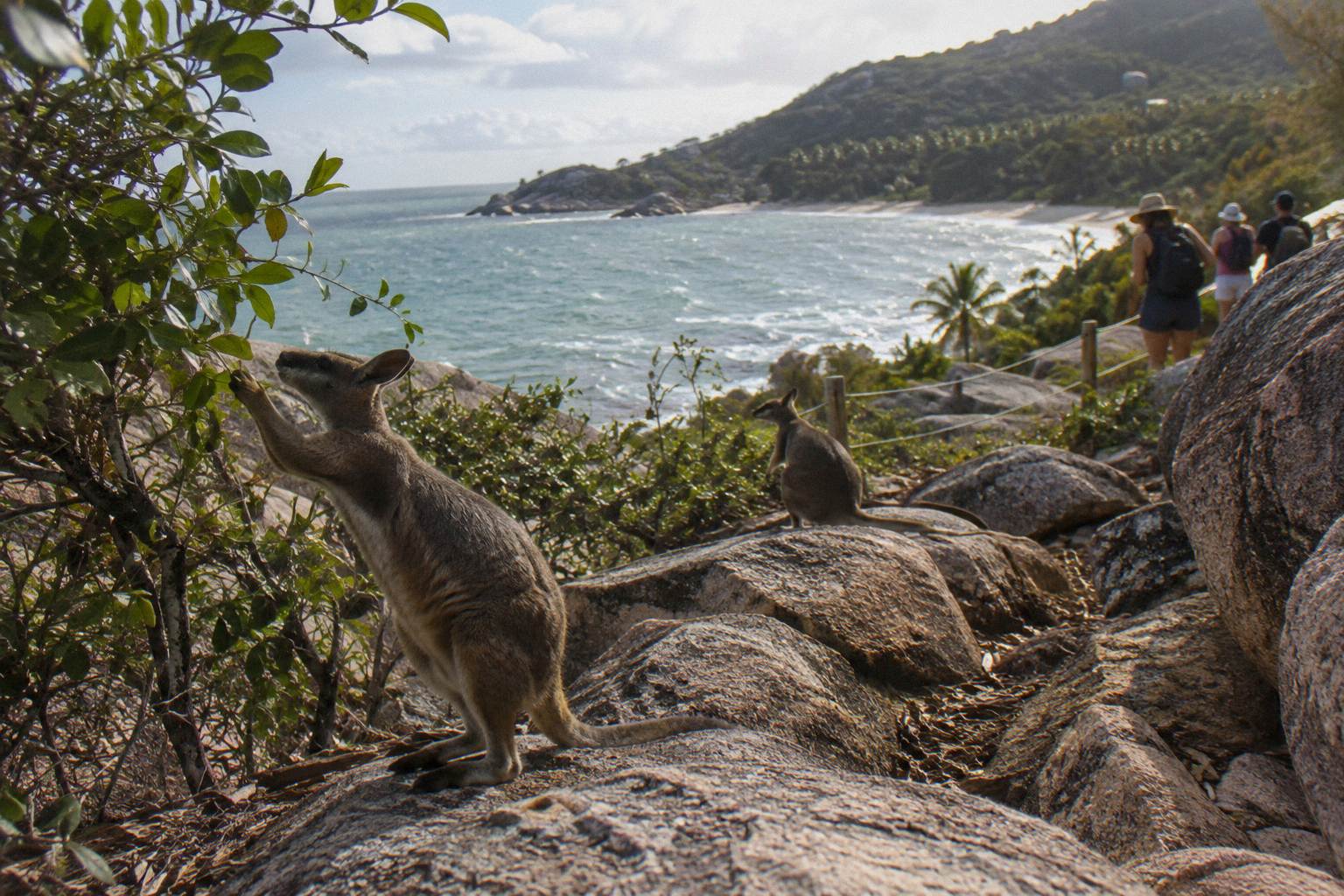
Allied rock-wallabies, Petrogale assimilis, are the second headline act. They stand about 60 to 70 cm tall and live in small colonies among the large boulders and caves, and their subtle colouring camouflages them against the granite, which makes them a challenge even where they are common. The park service advises looking for them feeding in the early morning and late afternoon, the same window that suits koala watching. Unlike koalas they move, so scanning open rock near woodland edges at the right hour is the method. The park service does not name specific bays as wallaby spots, so treat any location claim from a tour brochure as the operator's local knowledge rather than official fact.
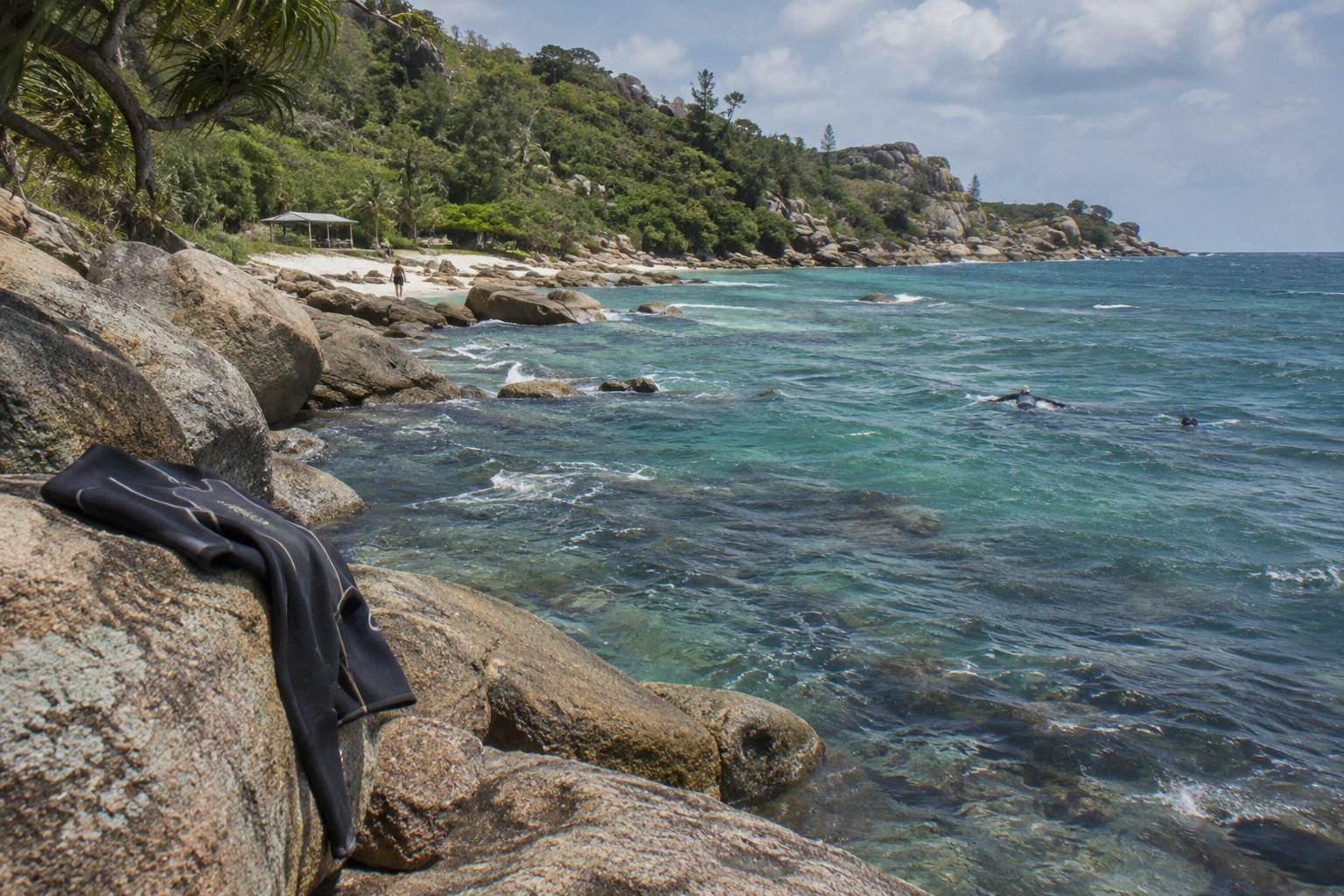
The wider cast is part of why the island's wildlife tours rate so well. In the water, the park service names Arthur Bay and Florence Bay as ideal for snorkelling straight off the beach, with sea turtles and a diversity of fish among the corals. On land, common death adders camouflage among the granite, a good reason to stay on formed tracks and watch where you put your feet. Birdlife rounds out the day for anyone with binoculars. The essential rules are simple and apply to all of it: feeding wildlife is not allowed in the national park, and distance protects both you and the animal. For the planning side of the marine half of the day, the site's guide to snorkelling around Magnetic Island is the companion piece to this one.
| Animal | Habitat | When to look | Official wording |
|---|---|---|---|
| Koala | Eucalypt and acacia woodland, Forts Walk | Early in the day; feeds late afternoon | Good chance of spotting one in the stunted trees |
| Allied rock-wallaby | Granite boulders and caves | Early morning, late afternoon | Camouflaged, look for them feeding |
| Sea turtles | Fringing reef, Arthur and Florence Bays | Daytime in the water | Swim with turtles and diverse fish |
| Reef fish and corals | Fringing reef off the beaches | Daytime snorkelling | Ideal for snorkelling straight from the beach |
How Do You Plan A Koala Day Without Wasting It?
Build the day around the wildlife windows, not the ferry timetable. Walk or tour the bush early, hold the middle of the day for the beaches or the wildlife park, and put a second short bush outing in the late afternoon if the morning produced nothing. The ferry runs about every 20 minutes of sailing across, with up to 17 return services a day, so the island end of the day is more flexible than most visitors expect.
The passenger ferry from Townsville takes about 20 minutes each way, and with up to 17 return services daily the real constraint is tour start times, not getting there. The five-hour island tours typically collect from island accommodation or the Nelly Bay terminal, so an early ferry from Townsville lands you in time for a full tour day. Neither the Behind the Scenes tour nor the History, Beaches and Wildlife tour includes the ferry fare, so budget for that ticket separately.
A sample koala-first day looks like this: early ferry, morning tour through the bush with a guide watching the canopy, lunch stop, then either the Forts Walk under your own steam in the mid-afternoon cooling hours, or the Koala Park at Horseshoe Bay for the guaranteed animals, or both, since the park sits right on the tour route home. If the morning tour produced a sighting, the afternoon is free for Alma Bay or a snorkel; if it did not, the walk is your second chance, and the park is your third. Layering the odds like this is what turns a maybe into a near-certainty across a whole day, without anyone promising you a koala.
Two cautions finish the planning picture. Stinger season runs from November to May, and swimming is safest inside the netted enclosures at patrolled beaches or on a tour that supplies stinger suits in season, which several on the lineup do. And book the popular five-hour tours ahead in peak periods, since a small island's guiding capacity fills on weekends and school holidays. Free cancellation up to 24 hours before start applies to the Behind the Scenes tour and several others, so booking early costs little flexibility.
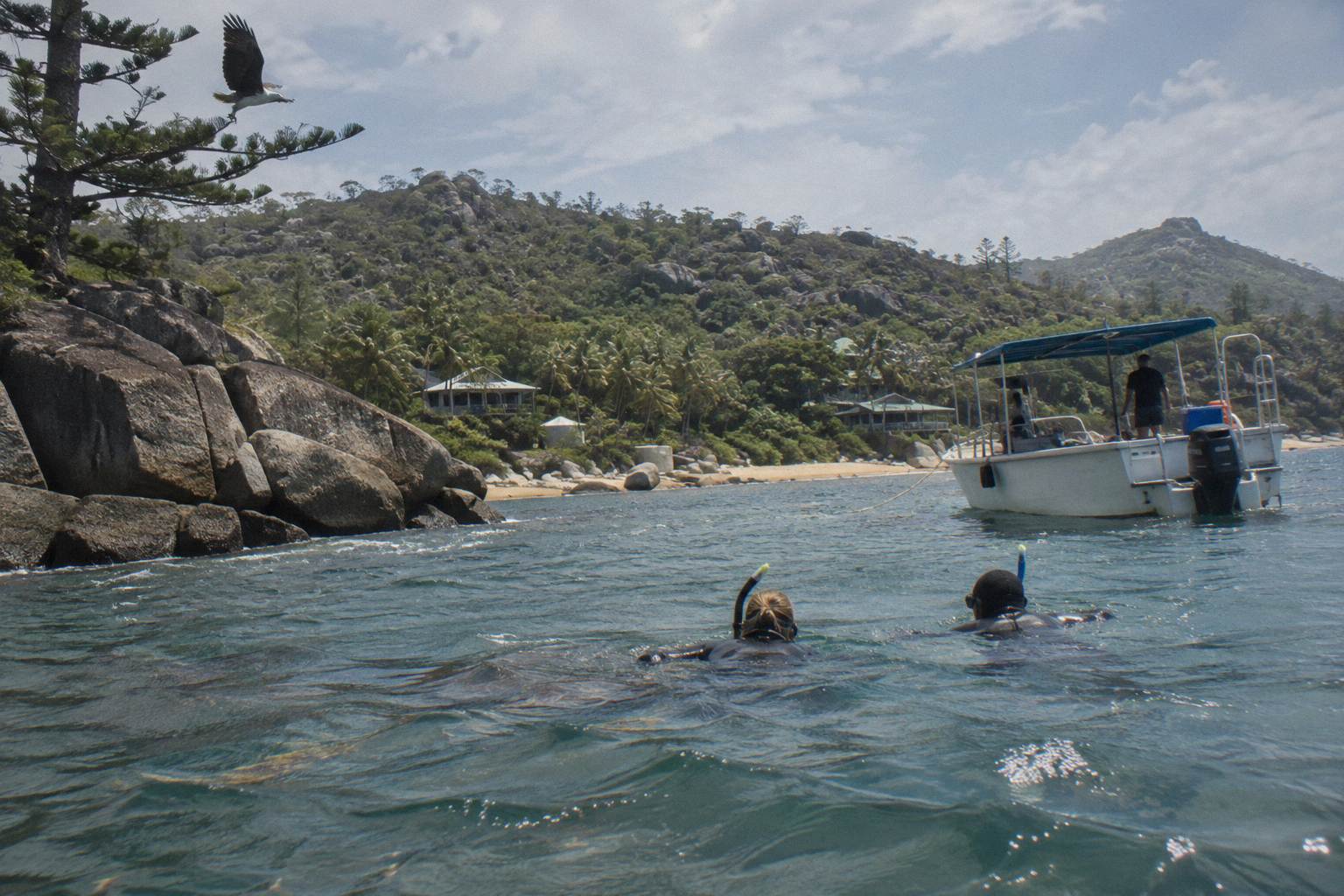
Before the practical questions, a quick recap of the grounded facts:
If the day is coming together, these are the three bookings that answer the question this article started with:
Common Questions About Koalas On Magnetic Island
Are There Koalas On Magnetic Island, And Can A Koala Tour Find Them?
Yes, wild koalas live on Magnetic Island, introduced in the 1930s and now numbering around 800 by a 2012 study estimate. A tour through the island's eucalypt woodland gives a real chance of a sighting, and the wildlife park guarantees close-up koalas, but no operator can promise a wild one.
Are Koalas Native To Magnetic Island?
No. They were introduced in the 1930s, moved from the mainland to protect them from perceived threats there. The island suited them and the population has grown to an estimated 800 animals.
Where Is The Best Place To See A Wild Koala?
The Forts Walk, a 4 km return Grade 3 track from Forts Junction. The park service says there is a good chance of spotting a wild koala in the stunted trees, and recommends walking early in the day when koalas and other wildlife are more active.
Can You Hold A Koala On Magnetic Island?
Wild koalas must never be approached or touched, and the island's wildlife carers stress they are easily stressed and may desert their young. For close-up koala experiences in a managed setting, look at the Koala Park entry options and read the site's guide to koala park experiences before booking.
Which Tour Gives The Best Chance Of Seeing A Koala?
The five-hour bus tours through the island's bush roads, such as Behind the Scenes with Tim Bee, from A$115, or History, Beaches and Wildlife, from A$95, put a local guide's daily sighting knowledge behind your day. Neither promises a koala, but both spend hours in the right habitat.
What Time Of Day Are Koalas Most Active?
Koalas sleep most of the day and feed in the late afternoon and evening. Early morning and late afternoon are the best viewing windows, which is why the park service recommends walking the Forts Walk early.